UNTIL THE CURTAIN FALLS: No Pasaran David Ebsworth 

UNTIL THE CURTAIN FALLS: No Pasaran

David Ebsworth 

This is the exciting sequel to Ebsworth’s highly enjoyable first novel – The Assassin’s Mark – on the 1936-39 Spanish Civil War. 

Peace-loving, naive left-wing journalist, Jack Telford, had, during a two-week spell as a Foreign Correspondent in September 1938, surprisingly become fond of many of his fellow travellers on a bus tour of battlefield sites organised by General Franco’s Tourism Department. 

The democratically elected Republican government was battling to prevent Franco, backed by fascist forces from Italy and Germany, from establishing a Nationalist government. The tours were intended to get international tourists to help celebrate Franco’s successes and get them to return home and ‘spread the word.’ 

Telford is drawn to a journalist who holds one of Franco’s most coveted awards. He’s shocked to discover she is, in fact, a passionate communist with links to the Soviet Union, who intends to use her access to the general to assassinate the dictator. Problem is the plan if successful would have left Jack to take the blame and so he kills the woman.

But what next? Can he escape being killed by a growing band of people and organisations? They include the Soviets that are providing military assistance to the Republican government and Franco’s forces. There are also pro-fascist members of the British diplomatic corps who learn that Telford knows they are doctoring reports being sent home about the true extent of war materials going from British firms in Spain to Hitler from the nationalists. 

Ebsworth – who in real life is former TGWU regional secretary Dave McCall – has really done his research. In Until the Curtain Falls, Ebsworth  brings to life the carnage, atmosphere, heroism, love, people, politics, architecture and landscape of Spain in the months leading up to the eventual defeat of the Republican government  in 1939. 

The tale is a great story that is packed with moments of real drama and passions. The survival of Telford  – plus those helping him – is constantly thrown into doubt as he and his pursuers battle to outwit one another. Ebsworth, for whom this is his sixth book, is deservedly building a reputation for writing entertaining novels rooted in real history and this latest work will add to that reputation. 

The Assassin’s Mark was the Unite book of the month for November 2013: http://www.unitetheunion.org/growing-our-union/education/bookofthemonth/november/#sthash.xEvaJgkp.dpuf

Until the Curtain Falls costs £10.99 and can be ordered through David’s site at:- http://www.davidebsworth.com/until-curtain-falls

ISBN 978-1-78132-643-5 

DIGGING FOR BRITAIN: The autobiography of Lord Williams of Barnburgh  ‘A revolution in agriculture.’ 

DIGGING FOR BRITAIN: The autobiography of Lord Williams of Barnburgh 

‘A revolution in agriculture.’ 

Mark Metcalf examines the life of Tom Williams, the Labour MP for the Don Valley, Sheffield from 1922 to 1959, who has a genuine claim to have done more for British agriculture than any other person. 

Before entering Parliament, Williams followed his father into the coal-mines, serving as the NUM branch secretary at Barnburgh Main Colliery in South Yorkshire. 

From 1918 to 1923, Williams was a Labour Party representative on the Doncaster Board of Guardians, which administered the local workhouses and oversaw the paying of public relief. 

Many local farmers sat on the board. Williams became aware of the low wage rates they  paid their employees. Williams and his friends helped establish local branches of the National Union of Agricultural Workers. 

At the 1922 general election, Williams won with a majority of 4,106. This figure grew at subsequent elections. The Tory government of Bonar Law, later replaced by Stanley Baldwin, failed to tackle rising unemployment levels and in 1923 the first minority Labour Government was elected. Williams became private secretary to Noel Buxton, the agriculture minister.

Labour was in power briefly but it did manage to initiate two significant pieces of legislation including the Sugar Beet Subsidy Act that kept five experimental sugar-beet factories going. The subsequent results allowed East Anglian farmers to engage in this form of agriculture. The Agricultural Wages Regulation Act, opposed by the Liberals but backed by the Tories, established a minimum wage of 30 shillings (£1.50) a week for agricultural workers. 

Labour was returned to power between 1929 only to be annihilated at the GE in 1931 Williams was charged with handling agricultural matters for the party over the following four years. It was a task he performed with distinction. 

With the likelihood of a war with Germany increasing, Labour again lost the election in 1935. The party did though have considerably more MPs and, under the able leadership, of Clement Attlee, the party proved an effective opposition. 

Williams highlighted the poor state of Britain’s farms with few farmers owning tractors or possessing the resources to modernise. Nevertheless farmers opposed any form of state intervention or support and strongly backed the Tory party. Poor productivity levels meant Britain was forced to feed a growing population by an over reliance of imports, something that could only have disastrous consequences in the event of a war in which the nation’s ports were faced with a German submarine blockade.

When Winston Churchill replaced Neville Chamberlain as Prime Minster in October 1940 he acted quickly by bringing into government the opposition Labour MPs. Williams became a junior minster under Bob Hudson, the Tory Agriculture Minster. The pair began a root and branch reform of the industry with everyone accepting that if Britain was to feed itself and win the war then the necessary radical reforms could only be undertaken through state control. Such were to be the successes of the new polices that they remained long after war ended in 1945. 

Despite the clearly emerging crisis, the Tories had allowed the total area of arable land to drop by half a million acres between 1936 and 1939. With enemy submarines now dramatically cutting food imports there was an immediate need to plough up an additional two million acres of grassland. There was not enough skilled ploughmen. 

Williams and Hudson moved swiftly to prevent agricultural workers finding jobs in factories, where the wages were much higher. The minimum weekly wage was upped from 37 shillings (£1.85) to 48 shillings (£2.40). In return farmworkers were restricted from quitting their posts.

The Ministry of Agriculture increased staffing levels and began discussing with farmers what assistance they required to boost production. Williams met farmers of all ages, including the young. After some initial hostility he found a warm welcome. Tractors, thanks to Fords, were produced at an extraordinary rate. The Dig for Victory campaign that Williams supervised saw gardens dug over and a massive increase in the numbers of allotment schemes initiated by local authorities.  

By the summer of 1940 it was agreed that the original two million grassland target needed doubling. Farmers did not posses the capital sums to achieve this figure. So it was agreed to give them an unqualified price guarantee from the Government for the duration of the war and a year after it ended in the form of fixed prices. Prices for feeding stuffs and fertilisers were also subsequently fixed. 

Labour’s long held contention that wildly fluctuating prices crippled British farming was now being accepted by the Tories in the most dire of circumstances. It had the effect of releasing the latent energy of the farming industry. Tillage acreage rose 68% in WWII, a lot more than the 20% figure achieved in WWI. More importantly, the quality of food that people ate was a lot better during WWII than previously.

The Tories promised during the war to formulate a satisfactory post-war policy for agriculture. Yet when civil servants proposed import boards, assured markets and fixed prices, Hudson found he had no support from his party. The Tories were devoted to the free market system that had previously almost destroyed agriculture.

In the event, Labour won a handsome victory at the 1945 GE and after which Williams became Minister of Agriculture. He set to work with great enthusiasm, realising that the job had only previously been a graveyard because a series of past Conservative Governments lacked a policy. 

The 1947 Agriculture Act, introduced only after close co-operation with farmers, translated Williams’ and Labour’s principles into legislation. 

With the world set to suffer from food shortages for years to come it was agreed to develop maximum levels of home produced good food. The aim was a healthy agricultural industry that combined food at the lowest price consistent with adequate renumeration for farmers and workers. This required the Government to guarantee prices to farmers for agricultural products such as milk, livestock, cereals, livestock and potatoes.

The price of food to the consumer was also controlled, the difference between what the farmer was paid for his product and what it cost the consumer was made up by the Treasury. 

Minimum price levels were set two years in advance. This allowed farmers to plan ahead assured of being able to draw a return on the investments they might make in new machinery.

The National Agricultural Advisory Service was inaugurated on 1 October 1946. 1,300 highly trained technical officers were made available to any farmer seeking practical advice for improving farming techniques. In return solutions to problems would be shared with others. 

With the existence of a long-term policy for agriculture, manufacturers of farm machinery now had the green light to go ahead and boost output levels. As a consequence they began to successfully export more products. This, in turn, increased employment in the sector. 

The Attlee Government also revised fishing and forestry. A system of loans and grants to fisherman, many of whom had served in the Royal Navy and had laid up their boats during WWI, to allow them to buy new boats and/or equipment was introduced. A new policy meant that the felling of timber and their prices were to be controlled for years afterwards.

Labour lost office in 1951. The Party obtained its highest number of votes ever and 231,000 more than the Tories, who ended up with a 17-seat majority and who were, at least, sensible enough to maintain the agricultural policies developed by the previous administration such that the production levels of crop, meat, milk, diary and farm machinery continued upwards, So too did average earnings of agricultural workers and aggregate farming net income. 

It was a win, win situation. Little wonder that Clement Attlee praised the work of Williams, who throughout his adult life experienced constant pain from rheumatoid arthritis, by saying that from 1945 to 1951 “he effected nothing less than a revolution in British agriculture.”

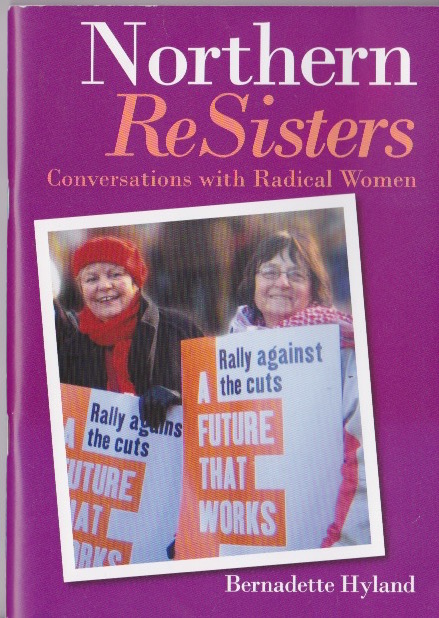
Northern ReSisters:  Conversations with Radical Women

Northern ReSisters 

Conversations with Radical Women

Bernadette Hyland 

hyland

Manchester’s Bernadette Hyland quotes Eddie Frow, who cofounded the Working Class Movement Library with Ruth Frow, as the inspiration behind her decision many years ago to take up writing when he said: “There’s workers history and there’s bosses history.” 

Such advice was not wasted as Hyland has done an excellent job in Northern ReSisters, producing a highly readable 80 page book of workers history that combines contemporary interviews with nine northern England radical women – chosen due to their involvement in resistance movements – along with a selection of her own writings stretching back to 1988 and starting with a piece on the Irish in Britain Representation Group. (IBRG) The author was a highly active member of the IBRG, which campaigned for the Irish in Britain to be represented in all areas of society and for a peaceful and just settlement in the North of Ireland. 

In 1991, Hyland conducted a highly informative interview with Bernadette Devlin (McAliskey), whose sensational election in 1969 as MP for the Mid-Ulster constituency marked a significant turning point in the fight against the ingrained discrimination of the Northern Irish State. 

23 years later, Hyland takes as her example suffragettes who, using the motto “if women don’t count, we won’t be counted,” disappeared from their homes on census night in 1911. She asks “what would women vanish for in 2014?” in their fight to change a still increasingly unfair society.

Betty Tebbs was born in 1918, joined a union at aged 14, became active in campaigning against nuclear weapons in 1946 and even today regards “the struggle for peace as vital if we are to secure any quality of life for young people or future generations.” Other women who are interviewed are involved in the trade union movement, the fight against the bedroom tax and the organising of commemorative events such as the one in Manchester each August for Peterloo 1819. All are seeking a better, fairer, more democratic society right across the world and the issue of internationalism rightly burns strong in Northern ReSisters. 

Costing £5.95 the book is published by the Mary Quaile Club

https://maryquaileclub.wordpress.com/publications/

https://maryquaileclub.wordpress.com

REDEMPTION SONG  Muhammad Ali and the Spirit of the Sixties 

REDEMPTION SONG 

Muhammad Ali and the Spirit of the Sixties 

Mike Marqusee

Second edition 2005 

By the time of his death, Muhammad Ali was viewed with great affection by the American establishment. 

Yet for several years in the 60s he was unchallenged as the most reviled figure in the history of American sports. Why this was the case is sharply analysed in this book by the late Mike Marqusee, a white American who permanently left the US in 1971 to live in England. 

Ali’s important social and cultural impact would not have been possible if he had not been a truly great boxer, winning Gold for the USA at the 1960 Olympics before becoming world heavyweight champion in 1964. Following which, under the direction of the Nation of Islam leader, Elijah Muhammad, he changed his name from Cassius Marcellus Clay to Muhammad Ali. 

This honour of being given a new Islamic name helped pull Ali away from Malcolm X, the man who had originally recognised his leadership qualities, and who was to be assassinated in the very month, February 1965, when the US upped its involvement in North Vietnam by launching its Rolling Thunder air war. By the time of the eventual ceasefire in the conflict eight years later, US planes had dropped three times the tonnage of bombs unloaded on all of Europe, Africa and Asia during World War II. 

The conflict in Vietnam was to be the first American war in which the mood amongst blacks was oppositional. Previously it had largely been the case that black involvement was viewed as a way of pressing claims for equality, long denied in a country built on the genocide of the indigenous population and subsequent racial segregation, in times of peace. Malcolm X had in 1963 become one of the best known black people to condemn America’s meddling in Southeast Asia. 

In early 1966, a time when opposition to the war was still limited, Ali was told he had been drafted and would have to fight in Vietnam. In an era when revolutionary movements were being constructed against colonialism, Ali replied: “Man, I ain’t got no quarrel with them Vietcong.” He was pilloried as sports commentator’s rushed to claim he had been ‘duped’ and didn’t understand what was taking place in Vietnam.  His forthcoming fight with Ernie Terrell in Chicago was ruled by the Illinois attorney general as illegal on grounds that he had not used his ‘correct name’ of Cassius Clay on the contract. Other possibles venues refused to host the fight.

When the US then moved to prosecute Ali for his public opposition to the war and the draft he refused to back down and he was subsequently stripped of his titles for over three and a half years. It was a time when he was arguably, as asserted by Hugh McIlvanney, taking boxing into new territory and was at his physical peak. 

Ali was to overturn his conviction for draft evasion in 1971 and return to the ring in what Marqusee describes as “a triumph over the system.” Ali was to go on to defeat Joe Frazier in 1973, George Forman in the ‘Rumble in the Jungle’ in 1974 and Leon Spinks in 1978, thus becoming the only man to become world heavyweight champion on three occasions. Ironically the Forman fight was bankrolled by dictator Joseph Mobutu who, with US support, had in 1960 overthrown the (only) democratically elected Congo President, Patrick Lumumba, who was subsequently assassinated. 

Marqusee shows how by the mid 70s, Ali was being embraced by the conservative white and black American establishment. This peaked in 1996 when, with support from advertisers, backstage lobbying by NBC Sports saw Ali chosen to light the torch at the Olympic Games in Atlanta, Georgia before a sell-out crowd of 83,000 people paying $600 a ticket. Ali’s international standing amongst the masses was being cynically used by capitalists to sell the Games and its spinoff products. 

‘TOMORROW BELONGS TO US’  The British Far Right Since 1967 

‘TOMORROW BELONGS TO US’ 

The British Far Right Since 1967 

Edited by Nigel Copsey and Matthew Worley in late 2017

The starting date was selected because the mergers on Britain’s far right in 1967 created the National Front (NF), the first major fascist party in Britain since the 1930s. 

Six years later in 1973 the NF candidate Martin Webster at the parliamentary by-election in West Bromwich obtained 16.2 per cent. Following which up until Margaret Thatcher, who adopted some of the language and immigration policies of the NF, was elected as Prime Minister in May 1979 the NF looked set to make a major electoral breakthrough. 

The youth wing of the neo-fascist Movimento Sociale Italiano had popularised the anthem ‘Tomorrow belongs to us’ in the 1970s. It struck an emotional chord with fascists globally. The white nationalist British cult band Skrewdriver reworked it in 1984 into a rock anthem that helped construct a successful subculture white power movement with international tentacles. 

Then in 2009 the BNP, a party that also won a large number of council seats in the first decade of the new century, had Nick Griffin and Andrew Brons elected to the European Parliament. 

These examples are possibly the high points for the far right since 1967. 

Consequently ‘tomorrow’ has to date not proven to be the case. Tomorrow though remains and we know from the deathly, barbarous examples of, amongst others, Nazi Germany and fascist Italy in the 30s and 40s that they – the far right – only have to win once for all sorts of groups not to have a tomorrow. 

Today we have before us political parties and social movements such as the EDL, the banned National Action Party, the rump of the BNP, the NF and its various offshoots and the British Movement and around which there exists a whole host of subcultures that includes holocaust denial, white power music, racial violence and terrorism.  

So what are their beliefs and what is it that motivates the far right organisers and how do they persuade others to join them in developing their authoritarian, rights-free paradise? This book, the sixth and most contemporary in the Routledge study series on fascism and the far right, thus attempts to investigate the politics of the far right so that those who seek to oppose them possess the knowledge of exactly what they are fighting. 

There are 12 chapters and they are each concise explanations of the subjects explored. 

They include some that are generally ignored when studies of the far right in Britain are conducted such as women’s involvement, homosexuality, music and attempts to develop links across national borders and nationalities. 

Some of the more regular subjects covered include holocaust denial and patriotism but not Islamophobia. Whilst it is true that this subject is covered extensively in many other publications I feel this is a mistake because the attempt to build on and generate anti-Muslim prejudice has been the number one agenda item now for far right groups for sometime. There is also an absence of analysis of how far right groups have sought to exploit concerns over unemployment, low pay and zero hours contracts by focusing on the arrival of, particularly since 2004 of EU, migrant workers. 

The denial of the holocaust has played a role in many fascist groups but the book points out that it is often hidden from the public if the group concerned begins to attract a reasonable following. Such was the case with the BNP in the 90s and at the beginning of the twentieth century.  Once the BNP was though reduced back to a rump in this decade it was willing to, when supporting the openly fascist Greek Golden Dawn party, again express its doubts about the holocaust and how many were massacred by Nazi Germany during it.

Meanwhile attempts to search for a ‘nationalist’ economy have never proven successful with far right groups who whilst being very anti-communist do not wish also to be stridently pro capitalist for fear of repelling working class people, which are the most exploited sections under capitalism. 

Attempts at economics usually, at best, come down to a series of bullet points – accompanied by a commitment to stop immigration – such as ban foreign imports, leave the EU and control investment overseas. Where the far right does attack capital it is always aimed at finance or banking capital, with the underlying implication being that these sectors are under the control of Jews and whose influence needs ending.

The two chapters on the Neo-fascist rock music scene of the mid 80s are both of great interest. They show how the far right learnt from the earlier successes of Rock Against Racism to create their own sub-culture. This was for a time highly financially lucrative. It also helped build a rapport and friendship between far right members and supporters from across different parts of Europe. Far right political groups picked up on this to encourage a belief in the defence of white people across Europe as a whole rather than the standard far right belief that ones one nationality is superior to any others even if the skin colours are the same.

The book has an interesting chapter on the importance of patriotism to EDL members and supporters before it ends with an excellent bibliographic survey of Britain’s far right since 1967. 

The book is thought provoking and despite my criticisms I would recommend it to everyone who wants to make sure that tomorrow does not EVER belong to the far right. 

You can purchase the book at:- 

https://www.routledge.com/Tomorrow-Belongs-to-Us-The-British-Far-Right-since-1967/Copsey-Worley/p/book/9781138675179

Striking a Light: the Bryant and May Matchwomen by Louise Raw

Louise Raw

STRIKING A LIGHT: The Bryant and May Matchwomen and their place in History 

Published by Bloomsbury

This book demonstrates that the 1888 strike by 1,400 matchwomen and girls at Bryant and May should rank with the similarly successful strikes by Gasworkers’ and Dockers’ the following year in changing forever the face of British trade unionism, which until then had tended to be craft unions only. Now, unskilled and poorly paid workers had the confidence to organise themselves and engage in collective action. Trade union membership doubled to over 1.5 million by 1892 and rose to over two million in 1899.

The women, who were  employed at a factory on Fairfield Road in East London, were poorly paid. Average pay was around 8 shillings (40p) a week with some earning less than 5 shillings. This was for a seven-day working week that started at 6.30am in the summer and 8am in the winter and which ran till 6pm with half an hour off for breakfast and an hour for lunch. Half a day’s pay was lost if they were late for work and there were also a series of illegal fines and deductions for materials such as glue and brushes. Many workers were confused about how their wages were calculated. They were also badly bullied by domineering foremen some of whom were not averse to handing out physical punishment.

Matches were essential in Victorian homes for lighting candles or gaslights and where coal fires provided heat and hot water. Although portable devices to produce a flame had existed for centuries it was the discovery of phosphorus in 1669 that paved the way for mass production of matches.

In 1831, the introduction of white phosphorus by French chemist Charles Sauria made matches much easier to strike by increasing their toxicity. Within a few short years it was well known that phosphorus poisoning affected workers in match manufacturing.

Safer alternatives were to be ignored for decades with Bryant and May, the largest match manufacturer in the UK, who persuaded the government to veto the proposed banning of white phosphorus internationally. Workers at Bryant and May were forced to take their meal breaks at their workstations, thus increasing the risk of contracting ‘phossy jaw’ in which the jawbone rotted producing evil-smelling pus that made it almost impossible for anyone to remain in the sufferer’s presence. Death, often very painful, was not uncommon. Bryant and May failed to report illnesses and fatalities and sacked any worker exhibiting any symptoms.

Bryant and May became a limited company in 1884 and they expanded overseas and bought out the smaller matchmaking companies in Britain, with their dominant position allowing the company to force down wages in the industry.

Workers at the factory took strike action to try and raise wages and improve factory safety with walkouts in 1881, 1885 and 1886. With no union organisation or funds these failed but demonstrated workers were aware of the need to collectively fight for their rights. This was also demonstrated by matchwomen throwing red paint over a statue of Liberal Prime Minister William Gladstone that had been erected by Theodore Bryant who illegally deducted a shilling from their wage packets to help pay for it.

Bryant and May’s shares had more than tripled in value since they were issued in 1884, leaping from £5 to over £18. Twenty per cent dividends were standard and amongst those to benefit were a number of prominent clergymen and Liberal politicians.

On 15 June 1888, after Henry Champion had drawn attention to low wages at the company, members of the Fabian Society resolved not to use any matches made by Bryant and May and called on others to also boycott the firm. Annie Besant was keen to investigate further and swiftly visited Fairfield Road where she – and possibly other Fabians who accompanied her – approached a small number of women as they left work to get accounts of their working conditions. They confirmed what Champion had said and she wrote an article for The Link that was published on 23 June.

By heading her work ‘White Slavery in London’ Besant made the point that it would cost Bryant and May much more to look after a slave than it paid in wages to its workers. The article did not however call for strike action, which, in general, Besant disapproved of during her life.

For well over a hundred years it has been assumed that Besant was the leader of the strike – with few historians questioning whether well over one thousand very poorly paid workers really would go without pay under the leadership of a middle class women they hardly knew – Louise Raw very capably demonstrates this was not the case. The key to this was a re-examination of Besant’s own writings and the newspapers of the day along with Raw’s finding and interviewing grandchildren of some of the strike leaders. Besant’s role in the strike was important but she was not its leader and to suggest so has meant the inspiring story of the matchwomen’s courage has remain hidden whilst the ability of working class people to successfully organise collectively in defence of their needs has been underplayed.

Besant’s article did though push the company on to the defensive and after denying all the charges Bryant and May sought to discover who had spoken with Besant. To ensure there were no such further attempts to exercise free speech workers were asked to sign forms stating they would remain silent about their working conditions.

Exactly how many refused to sign is not known but on 2 or 3 July at least one woman and possibly two more were dismissed. The company denied this had anything to do with any failure by a worker to sign the distributed forms and they cited a lack of trade and some disciplinary problems for the sackings. None of the remaining female workers believed this and suspecting foul play they downed tools and marched out of the factory.  The small number of male workers who mostly worked as dippers joined them.

Ignoring company reinstatement offers the women widened their demands to include other conditions, including the ending of illegal deductions. The women immediately organised an effective, noisy picket line and felt confident enough to send a deputation of six matchwomen to meet company directors. When the discussions were not to their satisfaction they resumed their strike.

On 6 July around one hundred strikers marched to the offices of Besant near Fleet Street and where three of them informed her of developments and asked for her assistance. The following day, Besant wrote a further article for the Link in which she expressed her dismay at the action the women had taken but continued to call for a boycott of Bryant and May’s products.

On 11 July, a friend of Besant’s, Charles Bradlaugh MP raised questions in Parliament and a deputation of 56 women who marched there to meet him brought parts of central London to a standstill as onlookers starred at the appearance of so many poor people. Newspaper coverage of the strike was intensified and for the first time it was reported that embarrassed shareholders were pressuring management at Bryant and May to come to a compromise with those refusing to work. The Star and Pall Mall Gazette began collecting donations from its readers and on 14 July the first strike pay was distributed. It was also reported that the women themselves had been collecting funds across East London.

On 16 July 1888 the company’s directors met with a deputation of matchwomen and two days later the company ceded to all the strikers’ demands. These included abolition of all fines, ending deductions for paints and brushes, all grievances to be taken straight to the managing director without the intervention of the foremen, the provision of a breakfast room to allow for meals to be eaten away from work stations and the formation of a union so that any future disputes could be officially laid before the company. The Union of Women Matchworkers, which was then the largest union of women and girls in the country, was formed, with Besant taking the role of secretary for the next few years. One of her first engagements was to speak to 5,000 Tilbury Dockers who in October 1888 unsuccessfully took strike action over a pay increase.

The Star newspaper had no doubt about the importance of the outcome:

The victory of the girls……is complete. It was won without preparation – without organization – without funds……a turning point in the history of our industrial development……

Even in 1923 every person at the Fairfield Works was believed to be a trade unionist.

The victory by the matchwomen would undoubtedly have raised morale amongst working people in East London. The factory on Fairfield Road was less than two miles from where the 1889 Dock Strike began. Strikers and dockworkers lived cheek by jowl; many were related to each other, including plenty with Irish backgrounds, whilst there are also strong indications that amongst both sets of workers there were some with a strong interest in radical politics.

During the 1889 Great Dock Strike its leaders such as Tom Mann, Ben Tillett and John Burns regularly made reference to the matchwomen as they recognised that what had been achieved demonstrated that the previously unorganised could combine and win improvements in pay and working conditions. The Dockers’ were to prove this was now a fact of life with a  famous victory that further threw open trade unionism to all workers whatever their skills.

Louise Raw must be congratulated for her persistence over many years to try and discover what really happened at Bryant and May in 1888 as she has produced a book of vital importance.