When Football Began

Ye Olde Hob Inn, Bamber Bridge, Lancs 

THE BATTLE OF BAMBER BRIDGE 

Ye Olde Hob Inn, Bamber Bridge, Lancs 

Ye Olde Hob Inn in Bamber Bridge is a 400-year-old Grade II listed former coach house with a thatched roof. It contains a grill, restaurant and a well stocked bar. The food our group was served was affordable good home cooked food. There was also plenty of it.  The Inn is ideal for some rest and relaxation.

It’s all a distant cry from Thursday June 24, 1943 when several American black soldiers, based at the nearby headquarters of the 1511th Quartermaster Truck regiment, objected to being informed that they she could not be served beyond the then legal closing time of 10pm.

Tension was high amongst the black servicemen, who as was the case throughout World War II were segregated from their white counterparts and frequently suffered great disparities in their treatment. This followed a riot in Detroit four days earlier that had left 25 black people dead, 17 shot dead by the police and following which riots spread to other cities. 

What happened next never appeared in any official war chronicles. But according to Anthony Burgess, author of Clockwork Orange, who was a lecturer at a nearby college after the war, “there was a battle..in Bamber Bridge, which was totally black in sentiment such that when the US military authorities had demanded that pubs impose a colour bar, the landlords had responded with Black Troops Only signs.”

A longer account of events appeared in a quarterly magazine After the Battle. It was written by military defence analyst and History Professor Dr Ken Werrell. His meticulous research included interviews with survivors. 

On hearing that there was an incident at the pub, two white military policemen (MPs) went to investigate. There was a deep mistrust between the segregated black troops and the MPs, whose appearance  was certain to be poorly received, especially when they attempted to arrest one of the black servicemen for having no pass. A crowd that included some local Britons surrounded and abused the MPs, one of whom drew his gun before they left to seek reinforcements. 

When further arrest attempts were later made the result was a black solider was shot before the black soldiers, on arriving back at their base, began taking arms to defend themselves. In the firefight that followed one black soldier, Private William Crossland, was shot dead. Two other black soldiers and one white were shot during what was termed a mutiny.

When calm was later restored over twenty men from the depot were later found guilty of charges that included resisting arrest and illegal possession of rifles. Sentences ranged from three months up to 15 years although in the event these were later reduced and only one served more than a year. 

Mark Ashton, Belfast

MARK ASHTON 

The education room at the Unite regional office on the Antrim Road, Belfast was renamed on 19 March 2016 in honour of Mark Ashton. This is the first time in Northern Ireland that a member of the lesbian, gay, bisexual and transgender (LGBT) community has been acknowledged outside of the LGBT community. 

This article (from 11 September 2014) is reproduced with the kind permission of the Morning Star, Britain’s only socialist daily newspaper.  https://www.morningstaronline.co.uk

‘PITS AND PERVERTS’: THE LEGACY OF MARK ASHTON

https://www.morningstaronline.co.uk/a-772e-Pits-and-perverts-the-legacy-of-communist-Mark-Ashton#.Vu_fJ8e0ii4

PETER FROST remembers one of The Sun’s most despicable headlines and how it was taken up as rallying call for working-class unity.

It has taken three decades for the BBC and the British film industry to tell the amazing story of Mark Ashton.

Thirty years is a long time, indeed a good few years longer than Ashton’s tragically short life — a life cut short by Aids at just 26 in 1987.

Mark, a mercurial young Irishman, was a gay rights activist and a founder member — some would say the founding member — of Lesbians and Gays Support the Miners (LGSM) during the epic miners’ strike of the 1980s.

LGSM came together to support the British miners during the year-long strike of 1984-5.

There were 11 LGSM groups throughout the country. London was the largest.

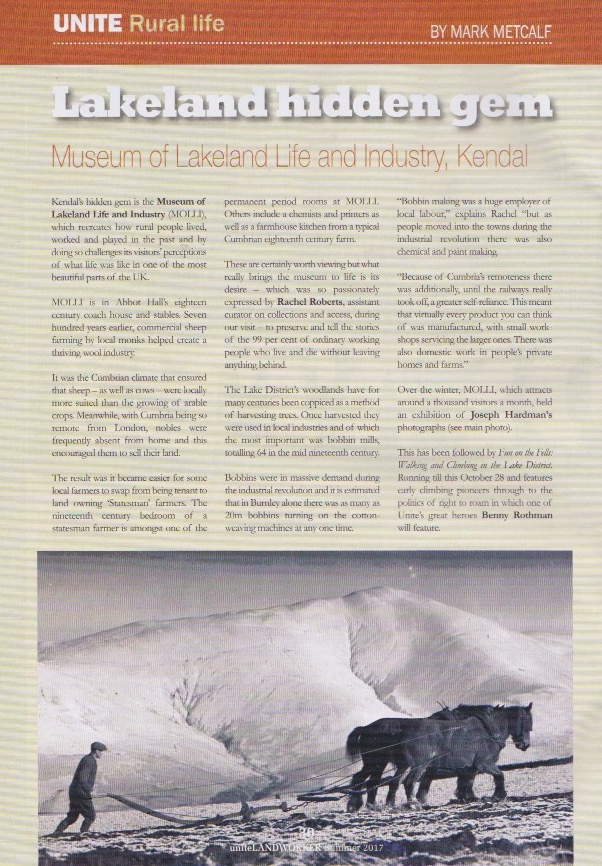
Museum of Lakeland Life and Industry, Kendal

Wednesday, 5 July 2017

LAKELAND HIDDEN GEM: Museum of Lakeland Life and Industry, Kendal

Kendal’s hidden gem is the Museum of Lakeland Life & Industry (MOLLI), which recreates how rural people lived, worked and played in the past and by doing so challenges its visitors’ perceptions of what life was like in one of the most beautiful parts of the UK.
MOLLI is in Abbot Hall’s eighteen century coach house and stables. Seven hundred years earlier, commercial sheep farming by local monks helped create  a thriving wool industry. This is reflected in Kendal’s motto ‘Pannus mihi panis’ meaning ‘cloth is my bread.’
It was the Cumbrian climate that ensured that sheep — as well as cows — were locally more suited than the growing of arable crops. Meanwhile, with Cumbria being so remote from London, nobles were frequently absent from home and this encouraged them to sell their land.
The result was it became easier for some local farmers to swap from being tenant to land owning ‘Statesman’ farmers. The nineteenth century bedroom of a statesman farmer is amongst one of the permanent period rooms at MOLLI. Others include a chemists and printers as well as a farmhouse kitchen from a typical Cumbrian eighteenth century farm.
These are certainly worth viewing but what really brings the museum to life is its desire — which was so passionately expressed by Rachel Roberts, assistant curator on collections and access, during our visit — to preserve and tell the stories of the 99 per cent of ordinary working people who live and die without leaving anything behind.
Display boards tell the history of how Cumbria’s minerals — zinc, lead, copper included — were first plundered by the Romans. Then how later on local mines attracted workers from across Britain and Europe with the German mining engineer Daniel Hechstetter granted permission in 1565 by Elizabeth I to melt ‘all manner of mines and ores of gold, silver and copper’ around Keswick and Coniston.
Another important local industry was shoemaking and the Kendal Cordwainer’s Guild was established in the seventeenth century to ‘protect mutual interests.’ Leather sold in the town was officially marked and no one outside the guild was to sell similar products. This was an early form of trade unionism.
The Lake District’s woodlands have for many centuries been coppiced as a method of harvesting trees. Quick growing trees such as oak and ash can be cut down to their shoots and within 15-40 years they can be as tall as 6 metres high. Once harvested they were used in local industries and of which the most important was bobbin mills, totalling 64 in the mid nineteenth century.
Bobbins were in massive demand during the industrial revolution and it is estimated that in Burnley alone there was as many as 20 million bobbins turning on the cotton-weaving machines at any one time.
“Bobbin making was a huge employer of local labour,” explains Rachel “but as people moved into the towns during the industrial revolution there was also chemical and paint making.
“Because of Cumbria’s remoteness there was additionally, until the railways really took off, a greater self reliance. This meant that virtually every product you can think of was manufactured, with small workshops servicing the larger ones. There was also domestic work in people’s private homes and farms.”
Exhibitions 
John Ruskin‘s first publication was his originally entitled 1829 poem Lines written at the Lakes in Cumberland. In the mid-1850s he taught drawing classes at the Working Men’s College in London and following which he was drawn towards social issues. Ruskin College in Oxford was established to provide educational opportunities for working-class men in 1899, a year before his death.
Ruskin lived near Coniston from 1871 till 1890. During his time he inspired the founding of the Langdale Linen Industry and the Keswick School of Industrial Art, which was opened in 1884 to alleviate unemployment by teaching metalwork and wood carving. “The aim was improve people’s skills such that they would enjoy making quality products, some of which we on display here, that everyone could buy. Sadly the production costs meant the goods were only affordable by well off people. This left Ruskin disappointed,” says Rachel.
Arthur Ransome was first educated in Windermere. He is best known for writing the Swallows and Amazons children’s book series that are centred around the Lake District and Norfolk Broads. Years previously, Ransome covered the Bolshevik Revolution for a radical newspaper, the Daily News. He became close to a number to a number of Soviet leaders including Lenin and Trotsky, whose personal secretary became Ransome’s wife. There is a very interesting permanent display on Ransome within the museum.
Over the winter, MOLLI, which attracts around a thousand visitors a month,  held an exhibition of Joseph Hardman’s photographs. http://www.unitetheunion.org/growing-our-union/education/bookofthemonth/march-2017/

2002_7_063
2002_8_3490
This has been followed by Fun on the Fells: Walking and Climbing in the Lake District. This will run till 28 October and features early climbing pioneers through to the politics of right to roam in which one of Unite’s great heroes Benny Rothman will feature.
“We would be delighted to welcome trade unionists to the museum and would welcome the support of branches within Unite, particularly those in the North west,” said Rachel.
MOLLI

Working Class Movement Library (WCML), Salford

Working Class Movement Library (WCML), Salford

Landworker article 2018 

Tony Benn, the late radical Labour MP, called the Working Class Movement Library (WCML) in Salford: “One of the greatest educational institutions.” It is internationally recognised for containing one of Britain’s most important collections of working class history as embodied in the trade unions, the co-operative movement, organisations of the oppressed and the political parties and campaigns of the left.

The library was established by and built on the personal collection of Ruth and Eddie Frow, who coming from rural Lincolnshire was always delighted to find an item or book on agriculture at the numerous fairs and bookshops that he visited with his wife. 

Consequently, the WCML contains a great collection of materials relating to rural social conditions through the ages and particularly since the second half of the nineteenth century onwards. 

The official reports include the 1843 one by the Special Assistant Poor Law Commissioners on the Employment of Women and Children in Agriculture nationally and which examined wages, working and living conditions and revealed widespread poverty and abuse. The pamphlets include ones by the Socialist Countryside Group, established after a fringe meeting at the 1981 Labour Party conference, examining rural housing, countryside access, national parks and low pay in agriculture. 

Periodicals include Landworker magazines going back to the 1930s. The WCML shelves contain numerous academic books on farming, agriculture, rural industries and communities by University lecturers and professors.  There are also lots of biographies and autobiographies, often written by politicians who have represented rural communities, including Joseph Arch’s, written in 1898. Additionally there are poems and songbooks and posters. 

The collection demonstrates how British rural life and working conditions has economically, socially and culturally changed, often beyond recognition and not always for the best. 

The agricultural collection is a very small part of the huge archive held by the WCML, which includes many newspapers, photographs, artefacts, banners and the personal papers of past labour movement heroes such as Benny Rothman. 

Anyone wanting to study in the library should search through its online catalogue as you need to ring in advance so that staff can ensure all relevant materials are available when you visit. 

The WCML has library exhibition space which hosts public information displays. There are regular talks, lectures and guided tours. A range of pamphlets are published annually and there is a library e-newsletter.

WCML only receives a small sum of public money. As an independent charity it largely relies on donations from individuals and trade unions with occasional trust grants. Please get your branch to affiliate as the WCML urgently needs financial support.

http://www.wcml.org.uk

Working Class Movement Library

51 The Crescent

Salford

U.K. M5 4WX

0161 7363601

William Wilberforce, Hull

IMG_2161

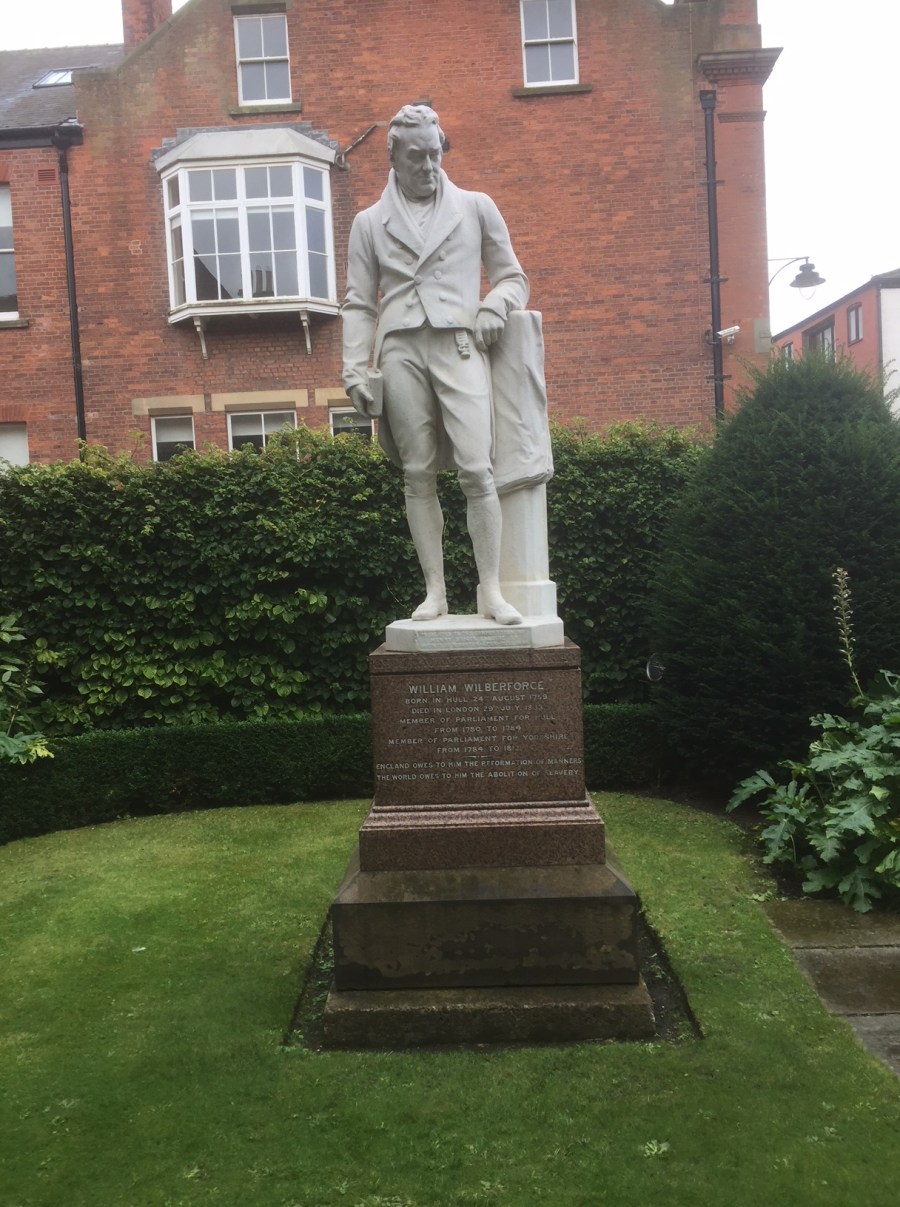
There is a statue of William Wilberforce outside his former home, which is now a museum. This is located within part of Hull’s Museum Quarter incorporating the Nelson Mandela Garden. Close to the Museum is a pub named after Wilberforce. 

Wilberforce was a native of Kingston upon Hull. Born to a prosperous merchant family in 1759, Wilberforce was just 21 when he became MP for Hull, switching four years later to represent the larger county seat of Yorkshire. 

It was following a dramatic conversion to evangelical Christianity that, at the suggestion of the prime minister, William Pitt the Younger, in 1787 he became the parliamentary leader of the abolition movement. Wilberforce made his first Parliamentary speech on the issue in 1789.

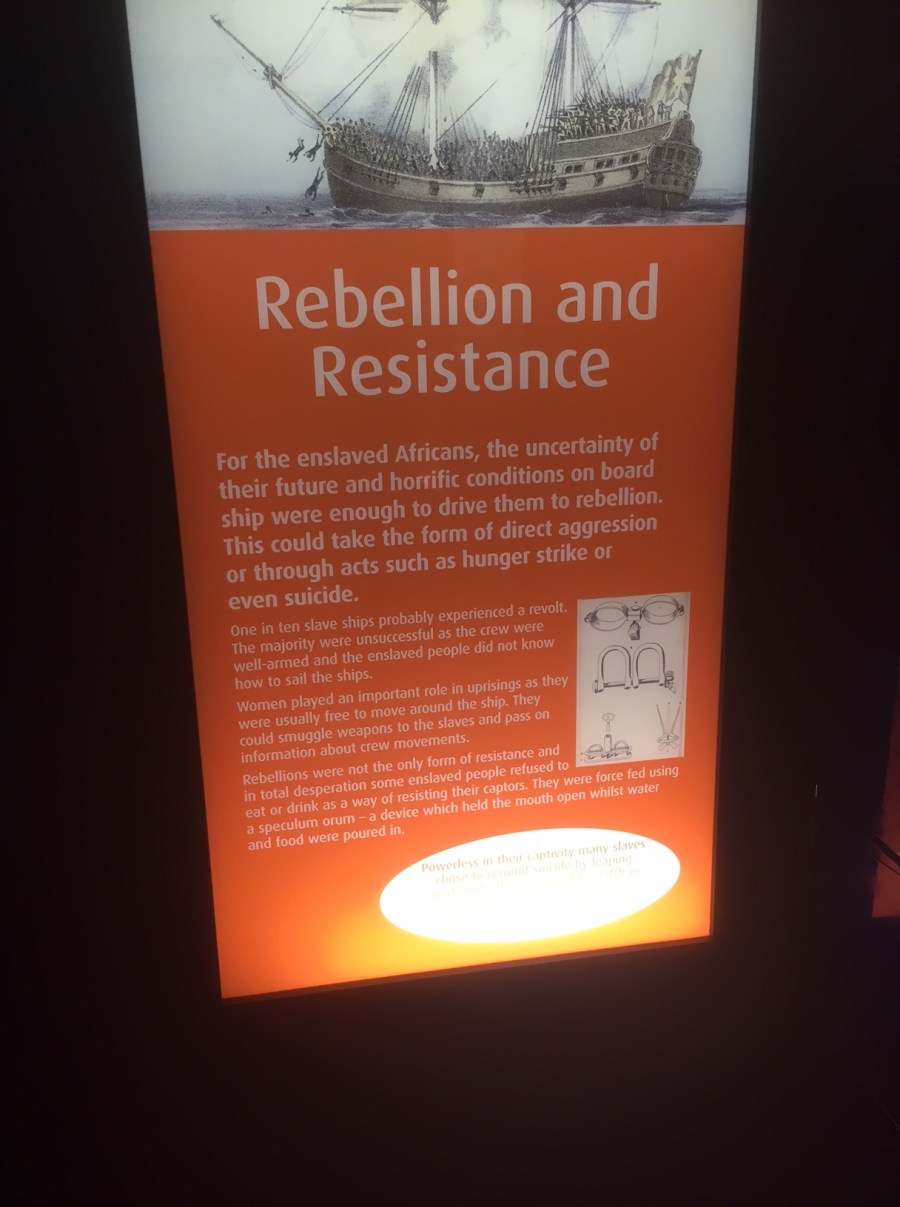
The slave trade was enormous and British ships transported 2.6 million of the 12 million slaves that from the late fifteenth century were taken from Africa to the Americas. 

For British slave traders it was a three-legged journey – the ‘triangular trade’ – whereby guns and brandy were traded in Africa for slaves, who were then transported under horrendous conditions to be sold in the West Indies and North America and following which traders returned to England with cargoes of rum and sugar for sale. 

The slave trade was thus highly profitable. In 1700, a slave cost around £3 in traded goods and could be sold for £20. The trade partly helped finance Britain’s subsequent industrial revolution.  

There were many slave uprisings. In 1791 slave leader Toussaint l’Ouverture – one of the greatest military leaders ever – led a successful slave revolution in Haiti. This, in part, prevented the abolition bill of the same year being passed in Parliament. 

The following year a similar bill, which had popular support, was successful but only after the legislation was weakened by the inclusion of the word ‘gradual’, plus a requirement for more research into the trade. Slave traders exploited this and with Britain at war with France from 1792 to 1805 the abolitionist campaign floundered. 

Wilberforce reintroduced his bill into Parliament in 1804. Having sounded out public opinion he published an influential tract in 1806. In 1807 he gave one of the greatest Parliamentary speeches of all time. He was subsequently backed an overwhelming vote that outlawed the trade in slaves on British ships. 

Slavery though remained in British colonies. In 1812, Wilberforce worked on the slave registration bill that failed to obtain Government backing. In 1823, Wilberforce published another tract  attacking slavery. 

Two years later, Wilberforce left Parliament. Just three days before he died on 29 July 1833 the emancipation bill received its final reading and slavery would be abolished – although not without the traders being heavily compensated! 

In 2006, Tony Blair expressed on behalf of the British Government “deep sorrow and regret” for the slave trade. 

The William Wilberforce pub on Trinity House Lane in Hull city centre is a Wetherspoon pub that serves a range of refreshments, including real ale, and a variety of food.

Hull City Council has an extensive website on Wilberforce at http://www.hullcc.gov.uk/museumcollections/collections/theme.php?irn=159

For more on Wilberforce see:- https://writemark.blogspot.com/2014/06/the-end-of-combination-acts-190-years.html


IMG_2164

Ralph Fox, Halifax

Remember Halifax’s Ralph Fox, killed in Spain on 28 December 1936 

IMG_4034

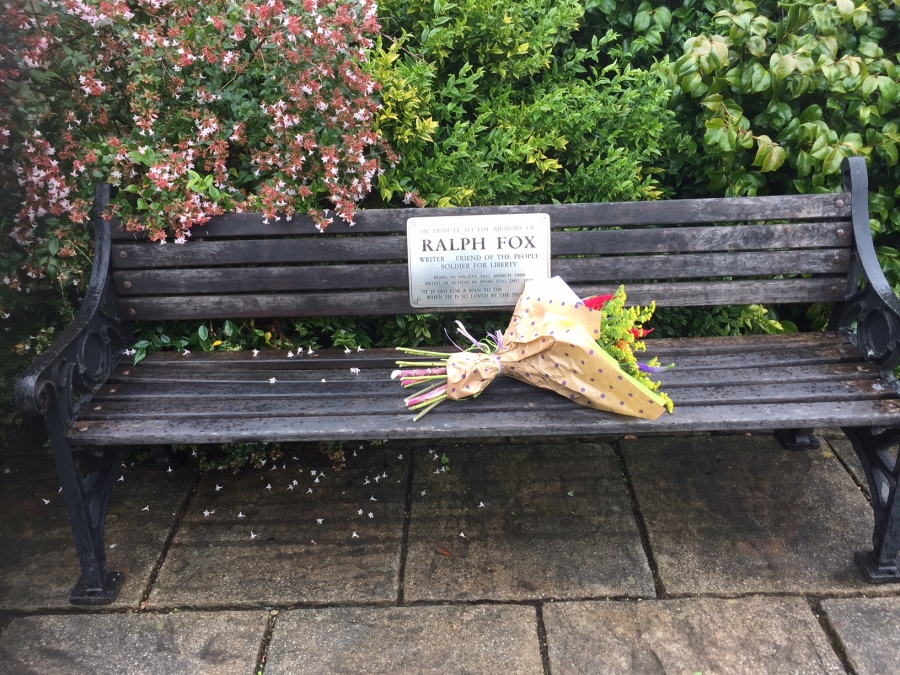
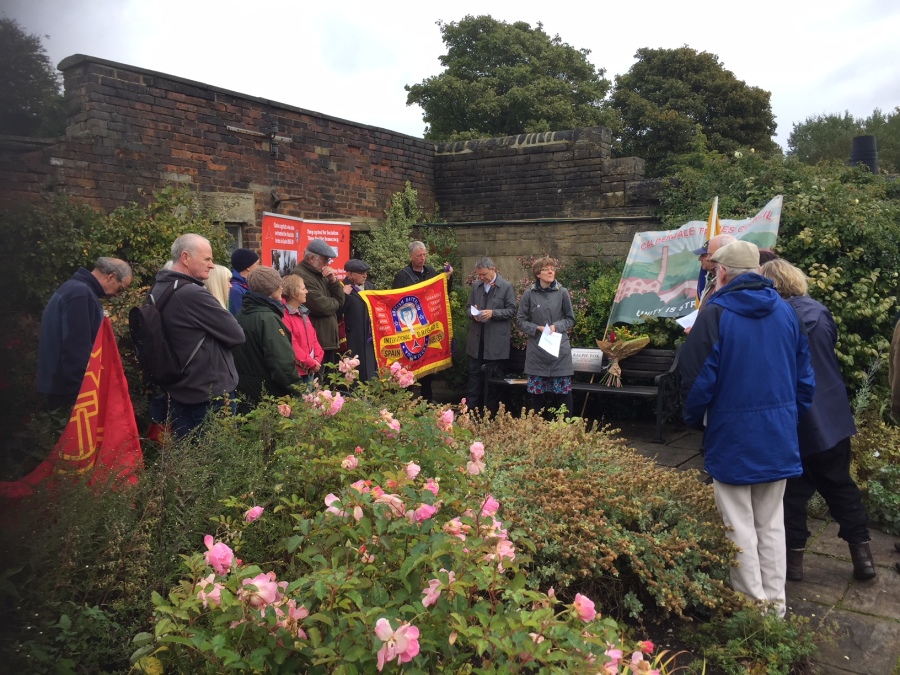
One of those who fought and died fighting Franco’s forces in Spain was Halifax’s Ralph Fox.  A bench in his memorial sits at the Manor Heath Walled Garden, Halifax 

Fox was a well-known member of the Communist Party of Great Britain (CPGB) and wrote biographies of the Russian revolutionary Vladimir Ilyich Lenin as well as Genghis Khan. 

Fox studied modern languages at Oxford University, where he was drafted into an officers’ cadet regiment only for the First World War to end before he saw active service. On his return he became active in efforts to half the British blockade to overthrow (Lenin’s) Bolshevik government which had assumed power following the Russian Revolution of 1917. In 1920, Fox travelled to the Soviet Union and returned convinced of the need to overthrow capitalism. After successfully completing his studies he later began work for the CPGB and completed his first major book. He later worked for the Daily Worker as a columnist and wrote several books for the Communist press. 

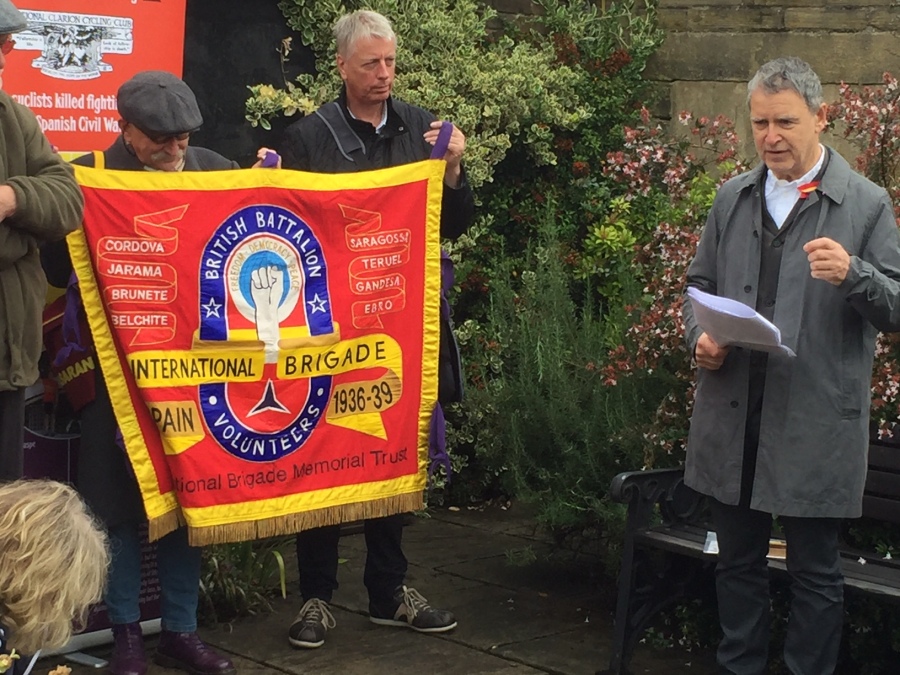
In 1936, Fox joined the International Brigades in order to fight fascism in the Spanish Civil War. These were military units composed of volunteers from different countries and who travelled to Spain to help defend the Second Spanish Republic between 1936 and 1939. The Brigades base was in Albacete and where Fox received training before being assigned to the XIV Brigade. He was sent to the front  during one of the first operations in which the Brigades were involved and died at the Battle of Lopera in the province of Jaen in late December 1936.

IMG_4019

IMG_4027
Jim Jump, chairman of IBMT at a Calderdale Trades Council commemoration event at the Ralph Fox bench in October 2018 


EMMELINE PANKHURST and her daughters Christabel and Sylvia

Manchester

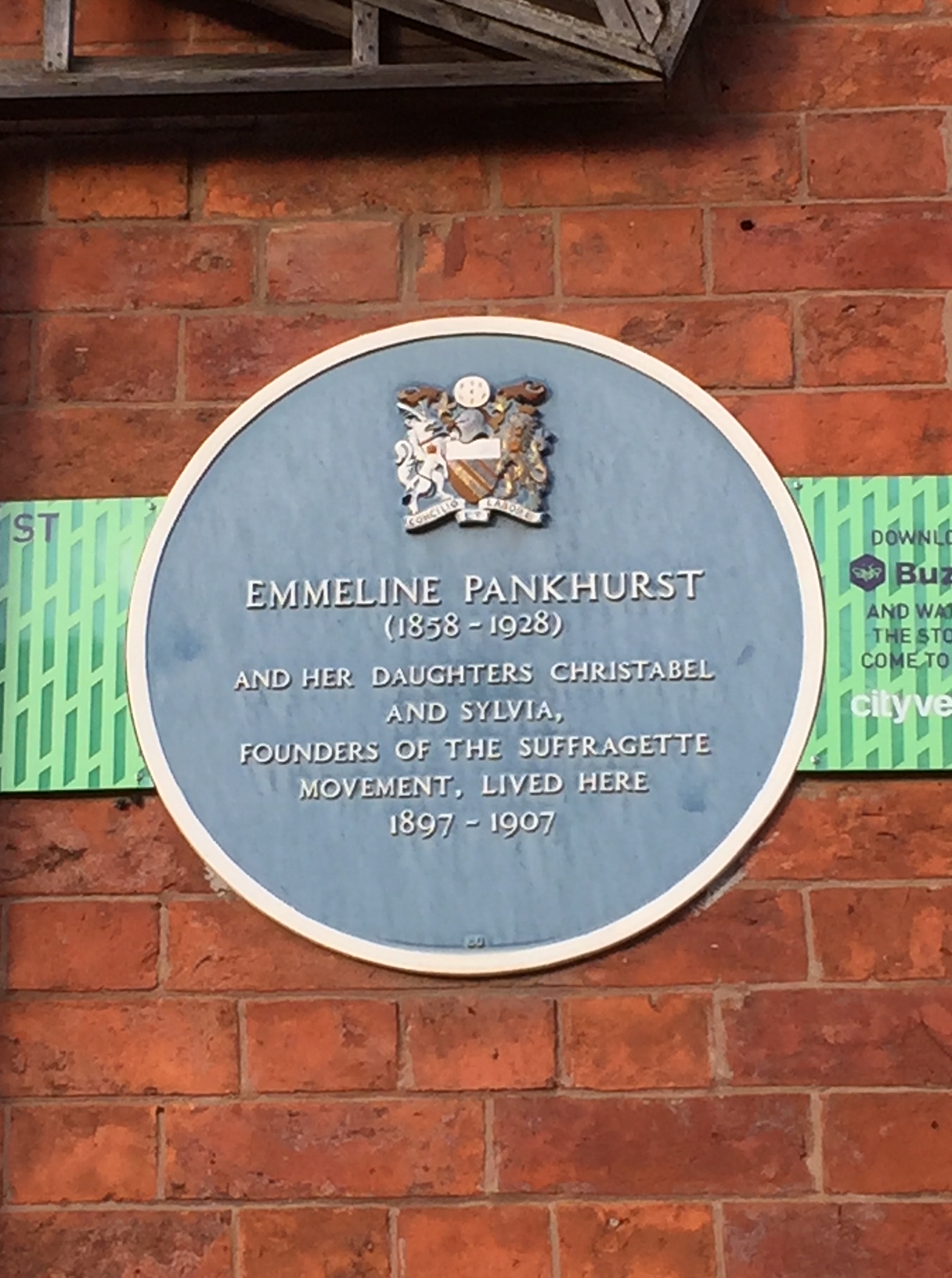
Pankhurst is the name most associated with the struggle for women’s right to vote and the first meeting of the Women’s Social and Political Union (WSPU) in 1903 was held at the family home of 62 Nelson Street, Manchester and where a blue plaque was mounted by Manchester City Council on 1 January 1987. 

IMG_4658

Emmeline was born in 1858 in Manchester. Her grandfather had been present at the Peterloo Massacre in 1819 and her grandmother had worked to repeal the Corn Laws. Both her parents backed the movement for women’s suffrage. She married Dr Richard Pankhurst, a radical barrister. They had five children and of which three girls survived.  Living in London from 1889 to 1893, Emmeline helped to form the radical Women’s Franchise League, which supported equal rights for women in areas of divorce and inheritance. 

Richard died in 1898, leaving his wife in considerable debt. In 1903 her daughter, Cristabel, frustrated by the peaceful tactics of the National Union of Women’s Suffrage Societies, founded 1897, persuaded Emmeline to join her in advocating more direct action. The first WSPU meeting was held and the motto ‘Deeds not words’ was adopted. Those involved became known as The SUFFRAGETTES and they increasingly used militant tactics to raise awareness of their demands. Emmeline was arrested on many occasions. There were attacks on Churches after the Church of England  had voiced its opposition to the concept of suffrage. MPs’  windows were smashed and politicians were harassed and their meetings disrupted. Winston Churchill and Sir Edward Grey were assaulted when speaking in Manchester. 

When many of those arrested refused to pay their fines they were imprisoned they continued their struggle by going on hunger strike and were force-fed.

Read the story of Julia Varley

Many suffragettes died following periods of incarceration, probably as a result of the horrific process of enforced nourishment that took place. In June 1913, Emily Wilding Davison, a WSPU activist, threw herself beneath the King’s horse as it took part in the Derby of that year. She was killed. The arson campaign continued to gain momentum but in August 1914, Britain was plunged into WWI.

The conflict resulted in Emmeline and Cristabel agreeing a truce with the government and WSPU militant suffrage activities were suspended for the following four years. Emmeline advocated for men to join the armed forces and encouraged employers to fill their vacant factory spaces by recruiting women to work in industry. She was a prominent figure in the white feather movement that was aimed at embarrassing men who had not already enlisted. 

As the war progressed the vital part that women were playing was grudgingly acknowledged. It became more and more obvious that arguments that women were not fit or clever enough to vote was a total misrepresentation.

Following the end of the carnage across Europe, the dissenters to suffrage were swept aside and the 1918 Representation of the People Act gave voting rights to women over 30. This was nine years older than rights for men. It was to be another decade before women were – under the Equal Franchise Act – granted equal voting rights at aged 21 with men. Emmeline, who died on 14 June 1928, lived just long enough to see a bill passed that achieved her lifetime ambition. 

Cristabel, who later spent many years in the USA, lived till 1958. As a young woman she obtained a law degree from the University of Manchester. Her sex meant she was unable to practise as a lawyer and she thus applied her legal expertise to highlight the inequalities and injustices experienced by women as well as organising large scale demonstrations. 

Sylvia Pankhurst was the second oldest daughter of the Pankhurst’s and proved to be the most militant. In 1906 she started working full-time for the WSPU. In the years leading up to WWI she was imprisoned on numerous occasions and when she moved to East London she came to see that the struggle for women to have the vote was part of a larger struggle for equality. This was not something the WSPU, including her mother and elder sister Cristabel, were prepared to agree with.  In 1914, Sylvia broke from the WSPU to form the socialist East London Federation of Suffragettes. (ELFS) As a pacifist, Sylvia opposed the war, during which she also organised several practical initiatives such as a baby milk distribution centre and a cost-price restaurant chain. 

She later joined the Communist Party of Great Britain (CPGB) but quit when she was asked to give the party the paper she had established, the Workers Dreadnought. In the lead up to WWII she became involved in the fight against the Italian invasion of Ethiopia and where she died aged 78 in 1960. 

There was also Adela Pankhurst, who was also active within the WSPU. She was imprisoned on many occasions. Concerned that her daughter might criticise the WSPU during WWI, Emmeline provided Adela with a one-way boat ticket to Australia. They never saw each other again. In 1920 Adela and her husband, Tom Walsh, set up the Australian Communist Party but she later became disillusioned with communism and abandoned left-wing politics altogether. Adele expressed some sympathy for fascism during WWII and was imprisoned for a year. She died in 1961.

IMG_4659

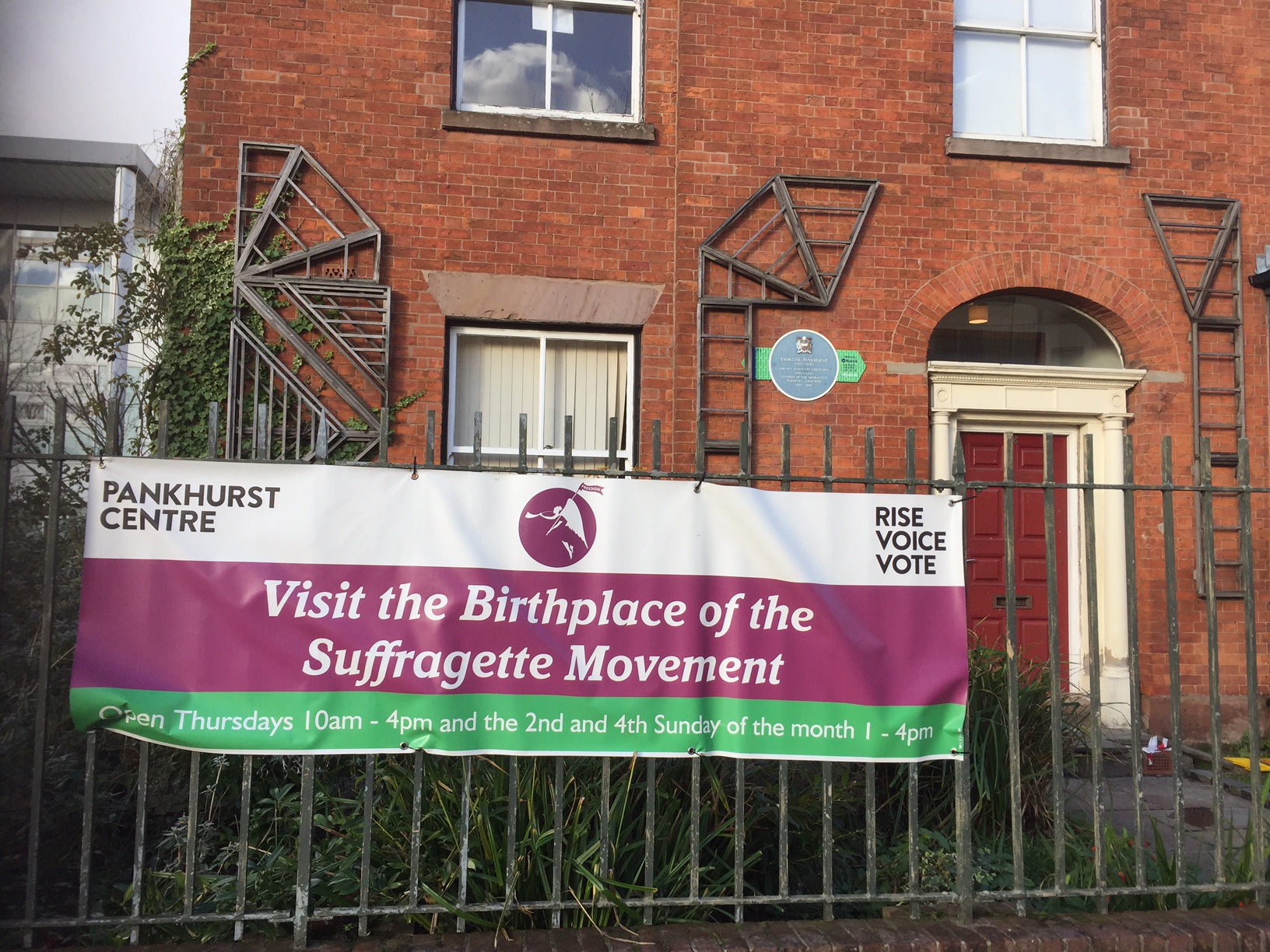
The plaque at Nelson Street, Manchester is located on the Pankhurst Centre, which serves as a women’s centre and community space. Manchester Women’s Aid, which provides essential support services to those suffering from domestic violence and abuse, joined forces in 2014 with the Pankhurst Trust, the body which oversees the Pankhurst Centre, to create a ‘unique space in which women can learn together, work on projects and socialise.’

See www.pankhursttrust.org

The Nelson Street plaque is one of a large number of public monuments to Emmeline Pankhurst. In December 2018 a Emmeline Pankhurst statue was unveiled in Manchester

https://www.theguardian.com/commentisfree/2018/dec/16/pankhurst-statue-manchester-suffrage-feminism-history

This is the second statue to honour Emmeline Pankhurst, the first, in bronze, was unveiled in Central London in 1930 and is the central feature of the Emmeline and Cristabel Pankhurst Memorial. https://en.wikipedia.org/wiki/Emmeline_and_Christabel_Pankhurst_Memorial

There is also an Emmeline and Cristabel plaque at 50 Clarendon Road, Notting Hill, London, W11 3AD and where they lived from 1916 to 1919. 

There is a plaque in Llanelli, where she spoke in 1912, to Emmeline Pankhurst. 

There is a blue plaque to Sylvia Pankhurst at Cheyne Walk, London

There is a second plaque bearing Sylvia’s name at 45 Norman Grove, London E3

… and a third is located at 3 Charteris Road, London , where she lived from 1933 to 1956

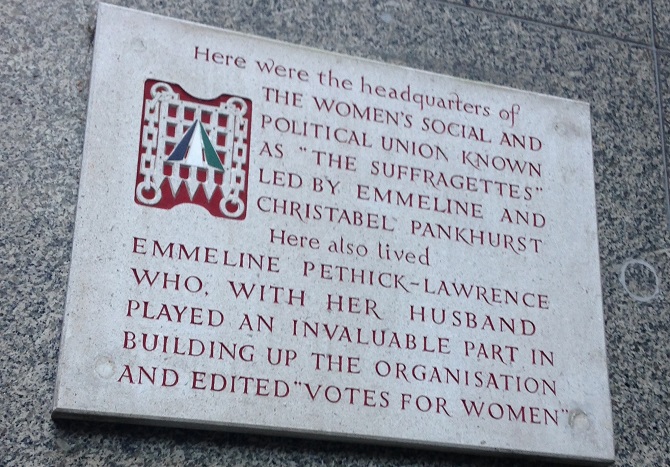
There is a plaque in Kingsway, London on what were the headquarters of the WSPU: 

WSPU-plaque
Credit to Hayley Reed for the use of this image

Ellen Wilkinson, Manchester

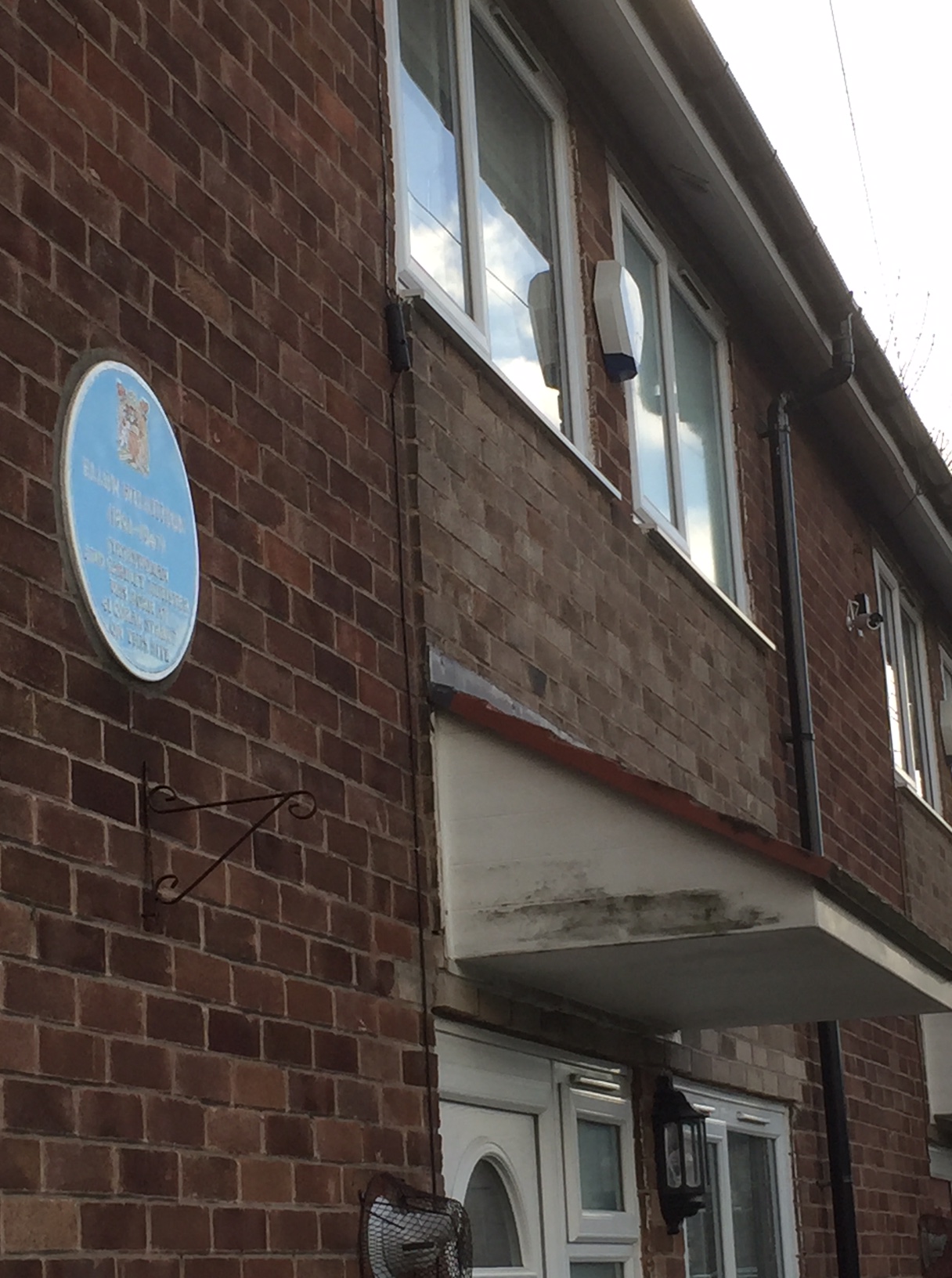
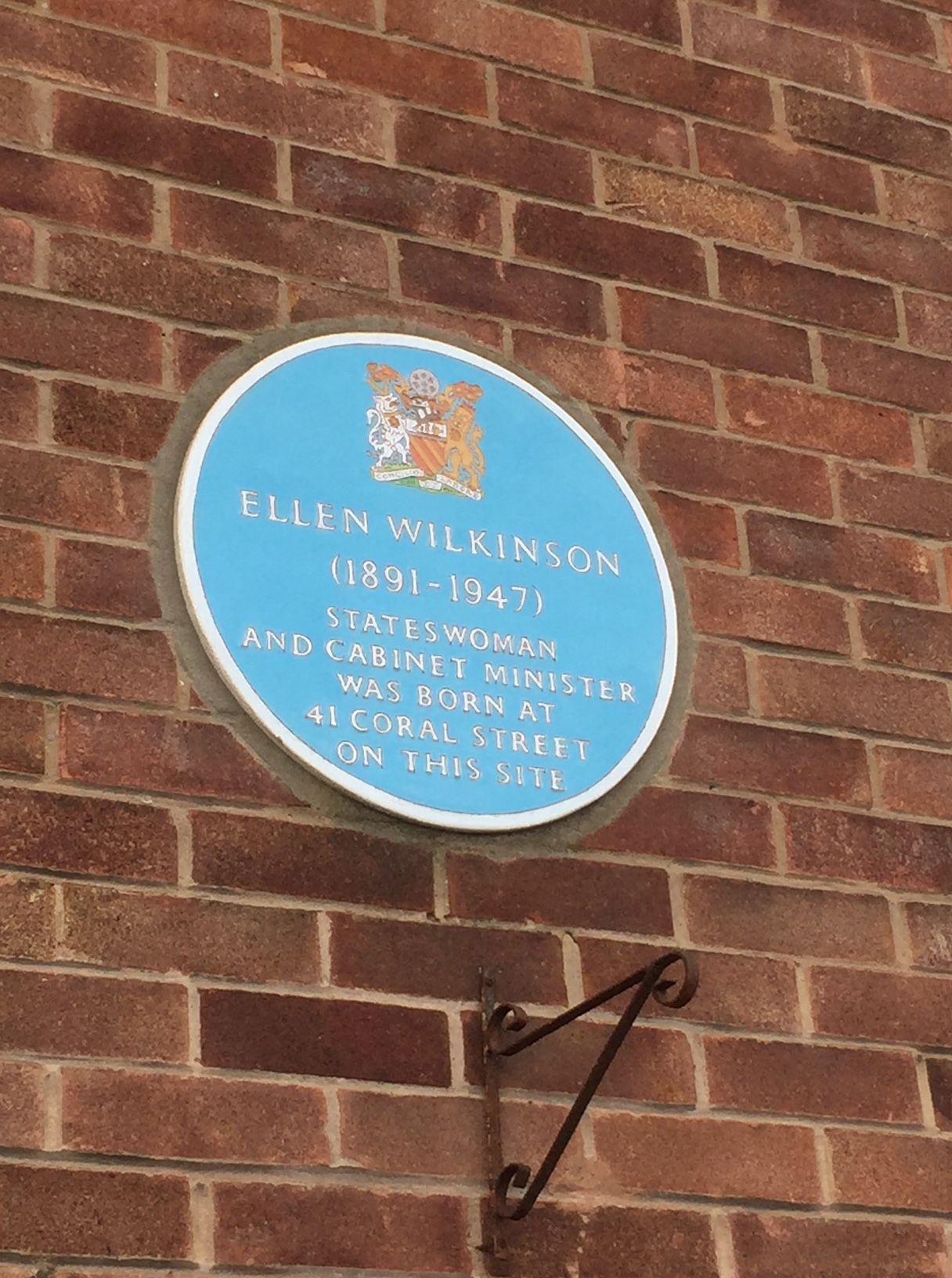
There are two plaques in Manchester that honour Ellen Wilkinson, one on the site of where she was born and the other close by at the University of Manchester where she graduated with a  2:1 in history at age 22 in 1913. She later completed an MA at the institution. 

IMG_4653


In her early years, Ellen backed women’s suffrage, supported socialist activities and was a member of the Independent Labour Party. Inspired by the 1917 Russian Revolution she joined the newly formed Communist Party of Great Britain three years later. 

In 1915, Wilkinson had become the national womens organiser for the Amalgamated Union of Cooperative Employees, which later became part of the National Union of Distributive and Allied Workers.  

In 1923, Wilkinson became the first female Labour MP when she was elected in Middlesbrough East. She backed the 1926 General strike but lost her Parliamentary seat to a National Candidate when Labour was heavily defeated nationally at the polls in the 1931 General Election. 

At Jarrow in 1935 she became an MP again. The major local employer, Palmers Shipyard, had just closed and unemployment and poverty was at record levels. Wilkinson campaigned for the erection of a large steelworks on the derelict shipyard site. It was a move opposed by the British Iron and Steel Federation.

In autumn 1936 she led the 300-mile Jarrow March to London but this failed to force the Tory Government to introduce policies to create jobs and halt malnutrition. Her book, The Town that was murdered, charted the suffering of the people of her constituency. As a small passionate red-haired woman she became known as ‘Red Ellen.’

From 1936 onwards, Wilkinson supported the Spanish Republic, condemned the British Government for its policy of neutrality and regularly visited battle zones. As Hitler continued to expand his military might and occupy parts of Europe, Wilkinson condemned Britain’s policy of appeasement. 

During WWII Wilkinson worked at the Ministry of Home Security and after the war ended she was appointed Minister for Education. She was first female to undertake the post. She introduced free school meals and milk for those unable to pay. She raised the school leaving age to 15. 

Wilkinson died during the bitter winter of 1947 when she took an accidental overdose of medication for bronchial asthma, a life long condition that she battled against. 


IMG_4665IMG_4664

Hannah Mitchell, Manchester

Hmitchell02


Hannah Mitchell (1872-1956) was born on a small Derbyshire farm, received only two weeks formal education and fled home at fourteen to escape the wrath and beatings of her mother. In Bolton she found work as a badly paid dressmaker, spending some of her earnings on subscribing to a small library and where she taught herself to read and write.

She met Gibbon Mitchell, a tailor’s cutter who was also a socialist and together they attended local branch meetings of the Independent Labour Party. (ILP) They became active in the trade union movement and passionate supporters of The Clarion journal of Robert Blanchford. 

When the pair married in 1895, Hannah insisted that Gibbon share domestic duties and despite her husband agreeing to do so he never ever quite did so. 

In 1904, Hannah joined the Women’s Social and Political Union – or Suffragettes as they were better known – that was headed by Emmeline Pankhurst.  In 1905 Hannah became a full-time organiser for the Union. She objected to how Emmeline and her sister Cristabel made all the major decisions without consulting fellow WSPU members. 

When Hannah disrupted a political meeting in 1906 at which future Prime Minister Winston Churchill was speaking, she was charged with obstruction and given a three-day jail sentence. 

When WWI started, Mitchell refused to get involved in the WSPU army recruiting campaign. She joined up with the ILP and other organisations opposed to the war. 

HMhouse


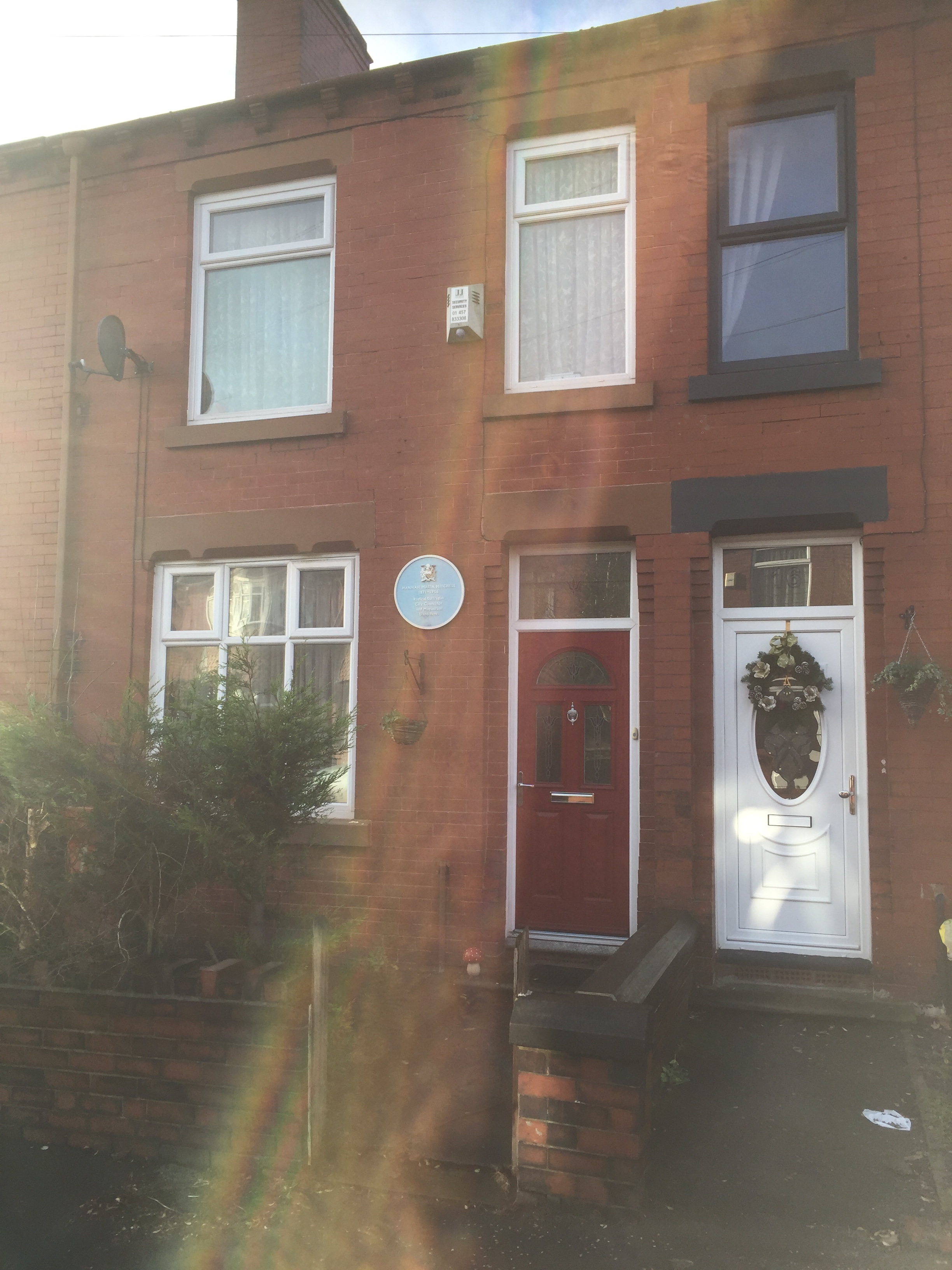
In 1924 Hannah Mitchell was elected to the Manchester City Council, who on 1 January 1996 erected a plaque in her honour at Ingham Street where she lived. Mitchell served as a councillor until 1935. She later wrote her autobiography The Hard Way Up in her seventies but it was not published until twelve years after her death in 1956.

A second plaque honouring Mitchell was unveiled in November 2018. It is part of South Derbyshire District Council’s Swadlincote Heritage Trail, celebrating the town’s inspirational industries, individuals and places and is located near to where she lived in her early years in Newhall. 

https://www.derbytelegraph.co.uk/burton/newhall-suffragette-hannah-mitchell-heritage-2235255

There is also a plaque, erected in Malakoff Street, Stalybridge by Tameside Metropolitan Borough in 2000, to Gibbon Mitchell. 

Benny Rothman, Timperley, Manchester

brothamplaque


Originally written in 2015 

See my Unite Education booklet from 2016 on Benny at:- https://markwrite.co.uk/wp-content/uploads/2018/07/6328-benny-rothman.pdf

See also the 13 minute documentary released  in 2018 on the Mass Trespass at:- https://markwrite.co.uk/2018/11/29/mass-trespass/

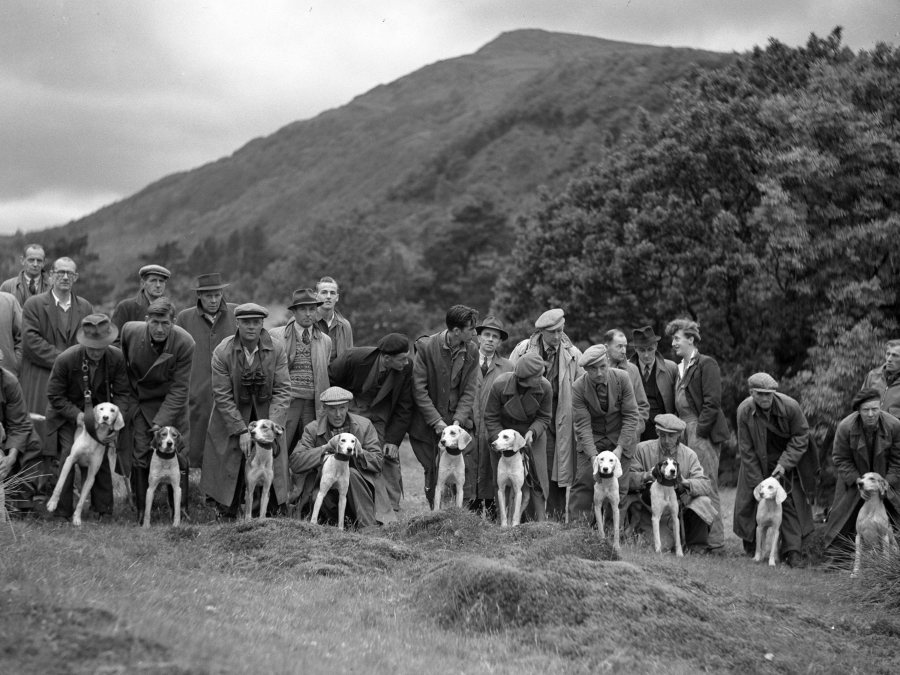
Trade unionist Benny Rothman, the man who led the Mass Trespass on Kinder Scout, Derbyshire, in April 1932, is commemorated with a blue plaque at his former Timperley home, seven miles south of Manchester.

Born in 1911 it wasn’t until Benny acquired a bike in his teens that he discovered life outside the overcrowded environment of working class Cheetham in north Manchester. He soon became a keen rambler and spent his 16th birthday climbing to the summit of Snowdon.

At the end of World War 1 in 1918 returning British soldiers had been promised by prime minister Lloyd George a “land fit for heroes.” Landowners, represented in Parliament and the Lords by the Tories, were intent on ensuring that didn’t include the right for those soldiers and others to roam Britain’s mountains and moorlands.

Since 1884 there had been numerous unsuccessful attempts made for an Access to Mountains Bill to be presented in Parliament and with each passing year the chances of an Act being passed seemed to recede.

In this situation the British Workers’ Sports Federation (BWSF) that started in 1928 as a working-class movement to organise sport for workers decided to trespass on Kinder Scout. It was not a universally popular move amongst ramblers.

On a sunny Sunday April 24, 1932, Benny, an active BWSF member, found himself thrust forward as the leader of 400 ‘kinder scout mass trespassers’.

Together in opposition to a line of gamekeepers, the trespassers successfully crossed the Derbyshire Peak District’s ‘forbidden mountain.’ Stung by this deliberate defiance of the law the police arrested six of them.

If the authorities felt this would be the end of the matter they miscalculated by sending Benny Rothman, listed in court as a storekeeper, and four (John Anderson, Julius Clyne, Anthony Gillett and David Nussbaum) others to prison – where Benny used his time productively to learn shorthand – for up to six months. The public outrage that followed helped bring the issue of the countryside to the fore.

More importantly it emboldened many access campaigners who in subsequent negotiations with landowners over obtaining access for walks could point to the trespass when their requests were refused.

A radical post-war Labour government responded by introducing the National Parks and Access to the Countryside Act in 1949. Lewis Silkin, the then Labour minster for town and country planning described it as, “a people’s charter for the open air, for the hikers and ramblers, for everyone who loves to get out into the open air and enjoy the countryside.”

The Peak District became the first designated national park and today there are fifteen. The passing of the Act also means there are over 50 designated areas of outstanding natural beauty and over 200 natural nature reserves that are there to protect what are seen as the most important areas of wildlife habitat and geological formations and as places of scientific information.

Th right to roam took much longer to obtain. Again, Benny played an important part. In 1982, with access still restricted on many hills, 2000 ramblers celebrated the 50th anniversary of the mass trespass by following the same path.

According to Terry Howard, Sheffield Ramblers chairman, “Benny Rothman addressed us in the quarry where the original trespass had started. He helped inspire a whole new generation like myself to finish what earlier campaigns had started.”

In 2000, under another Labour government, the Countryside Rights of Way Act established the right to roam on certain upland and uncultivated areas of England and Wales. Many new paths allowing open access have been created.

Benny died aged 90 in 2002. According to his son Harry, “he rarely spoke about Kinder Scout as he had far too much going on in his life as he was engaged in things that were immediately important such as trade union and Communist Party work.” His passion for a better world was shared by his wife, Lilian, a mill worker from Rochdale.

In the 1930s Benny played an active role in physically opposing Oswald Mosley’s Blackshirts and over forty years later he helped to inspire a new generation of anti-fascists by speaking to them about the dangers of the National Front.

Benny worked as a fitter for most his life. He was regularly elected to represent his fellow members in the Amalgamated Engineering Union. (one of the forerunners to Unite)

At Metro-Vicks in the 1950s his reputation for winning the best piecework rates led to him being sacked and, sadly, his workmates did not support him. He was later victimised by his employers when the Hungarian Revolution in 1956 took place. He nevertheless continued to be an active trade unionist.

“There were always visitors to our home in Timperley such as guys who had been unfairly sacked.

“Dad was a clever bloke and had a good memory. He used his shorthand to keep good notes and so when it came to negotiations with management I understand he would constantly refer back to them when someone might like to say something different.”  Professor Harry Rothman.

Throughout the 1984-85 miners’ strike, Benny was tireless in organising support for strikers. In 1990, Benny Rothman, who was a great friend of Hugh Scanlon, was given the Amalgamated Engineering Union’s highest award, the special award of merit. Six years later he was made honorary life member of the Ramblers Association.

* A booklet on Benny’s life is currently being written by myself for the Unite Education department. All being well it will be out in 2016.

Benny Rothman,Timperley, Manchester

Originally written in 2015 

See my Unite Education booklet from 2016 on Benny at:- https://markwrite.co.uk/wp-content/uploads/2018/07/6328-benny-rothman.pdf

See also the 13 minute documentary released  in 2018 on the Mass Trespass at:- https://markwrite.co.uk/2018/11/29/mass-trespass/


Trade unionist Benny Rothman, the man who led the Mass Trespass on Kinder Scout, Derbyshire, in April 1932, is commemorated with a blue plaque at his former Timperley home, seven miles south of Manchester.

Born in 1911 it wasn’t until Benny acquired a bike in his teens that he discovered life outside the overcrowded environment of working class Cheetham in north Manchester. He soon became a keen rambler and spent his 16th birthday climbing to the summit of Snowdon.

At the end of World War 1 in 1918 returning British soldiers had been promised by prime minister Lloyd George a “land fit for heroes.” Landowners, represented in Parliament and the Lords by the Tories, were intent on ensuring that didn’t include the right for those soldiers and others to roam Britain’s mountains and moorlands.

Since 1884 there had been numerous unsuccessful attempts made for an Access to Mountains Bill to be presented in Parliament and with each passing year the chances of an Act being passed seemed to recede.

In this situation the British Workers’ Sports Federation (BWSF) that started in 1928 as a working-class movement to organise sport for workers decided to trespass on Kinder Scout. It was not a universally popular move amongst ramblers.

On a sunny Sunday April 24, 1932, Benny, an active BWSF member, found himself thrust forward as the leader of 400 ‘kinder scout mass trespassers’.

Together in opposition to a line of gamekeepers, the trespassers successfully crossed the Derbyshire Peak District’s ‘forbidden mountain.’ Stung by this deliberate defiance of the law the police arrested six of them.

If the authorities felt this would be the end of the matter they miscalculated by sending Benny Rothman, listed in court as a storekeeper, and four (John Anderson, Julius Clyne, Anthony Gillett and David Nussbaum) others to prison – where Benny used his time productively to learn shorthand – for up to six months. The public outrage that followed helped bring the issue of the countryside to the fore.

More importantly it emboldened many access campaigners who in subsequent negotiations with landowners over obtaining access for walks could point to the trespass when their requests were refused.

A radical post-war Labour government responded by introducing the National Parks and Access to the Countryside Act in 1949. Lewis Silkin, the then Labour minster for town and country planning described it as, “a people’s charter for the open air, for the hikers and ramblers, for everyone who loves to get out into the open air and enjoy the countryside.”

The Peak District became the first designated national park and today there are fifteen. The passing of the Act also means there are over 50 designated areas of outstanding natural beauty and over 200 natural nature reserves that are there to protect what are seen as the most important areas of wildlife habitat and geological formations and as places of scientific information.

Th right to roam took much longer to obtain. Again, Benny played an important part. In 1982, with access still restricted on many hills, 2000 ramblers celebrated the 50th anniversary of the mass trespass by following the same path.

According to Terry Howard, Sheffield Ramblers chairman, “Benny Rothman addressed us in the quarry where the original trespass had started. He helped inspire a whole new generation like myself to finish what earlier campaigns had started.”

In 2000, under another Labour government, the Countryside Rights of Way Act established the right to roam on certain upland and uncultivated areas of England and Wales. Many new paths allowing open access have been created.

Benny died aged 90 in 2002. According to his son Harry, “he rarely spoke about Kinder Scout as he had far too much going on in his life as he was engaged in things that were immediately important such as trade union and Communist Party work.” His passion for a better world was shared by his wife, Lilian, a mill worker from Rochdale.

In the 1930s Benny played an active role in physically opposing Oswald Mosley’s Blackshirts and over forty years later he helped to inspire a new generation of anti-fascists by speaking to them about the dangers of the National Front.

Benny worked as a fitter for most his life. He was regularly elected to represent his fellow members in the Amalgamated Engineering Union. (one of the forerunners to Unite)

At Metro-Vicks in the 1950s his reputation for winning the best piecework rates led to him being sacked and, sadly, his workmates did not support him. He was later victimised by his employers when the Hungarian Revolution in 1956 took place. He nevertheless continued to be an active trade unionist.

“There were always visitors to our home in Timperley such as guys who had been unfairly sacked.

“Dad was a clever bloke and had a good memory. He used his shorthand to keep good notes and so when it came to negotiations with management I understand he would constantly refer back to them when someone might like to say something different.”  Professor Harry Rothman.

Throughout the 1984-85 miners’ strike, Benny was tireless in organising support for strikers. In 1990, Benny Rothman, who was a great friend of Hugh Scanlon, was given the Amalgamated Engineering Union’s highest award, the special award of merit. Six years later he was made honorary life member of the Ramblers Association.

* A booklet on Benny’s life is currently being written by myself for the Unite Education department. All being well it will be out in 2016.