When Football Began

Ernest Jones, Chartist, Manchester

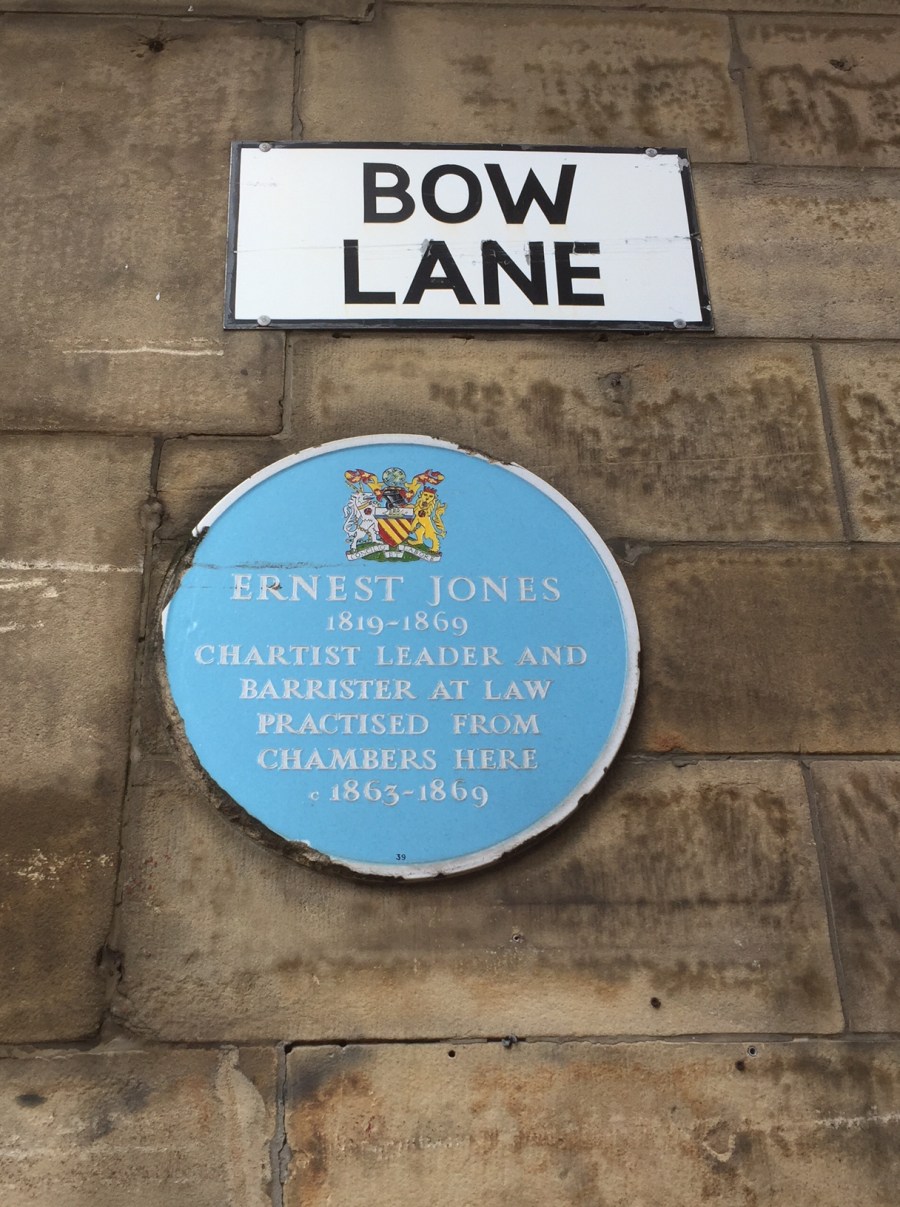
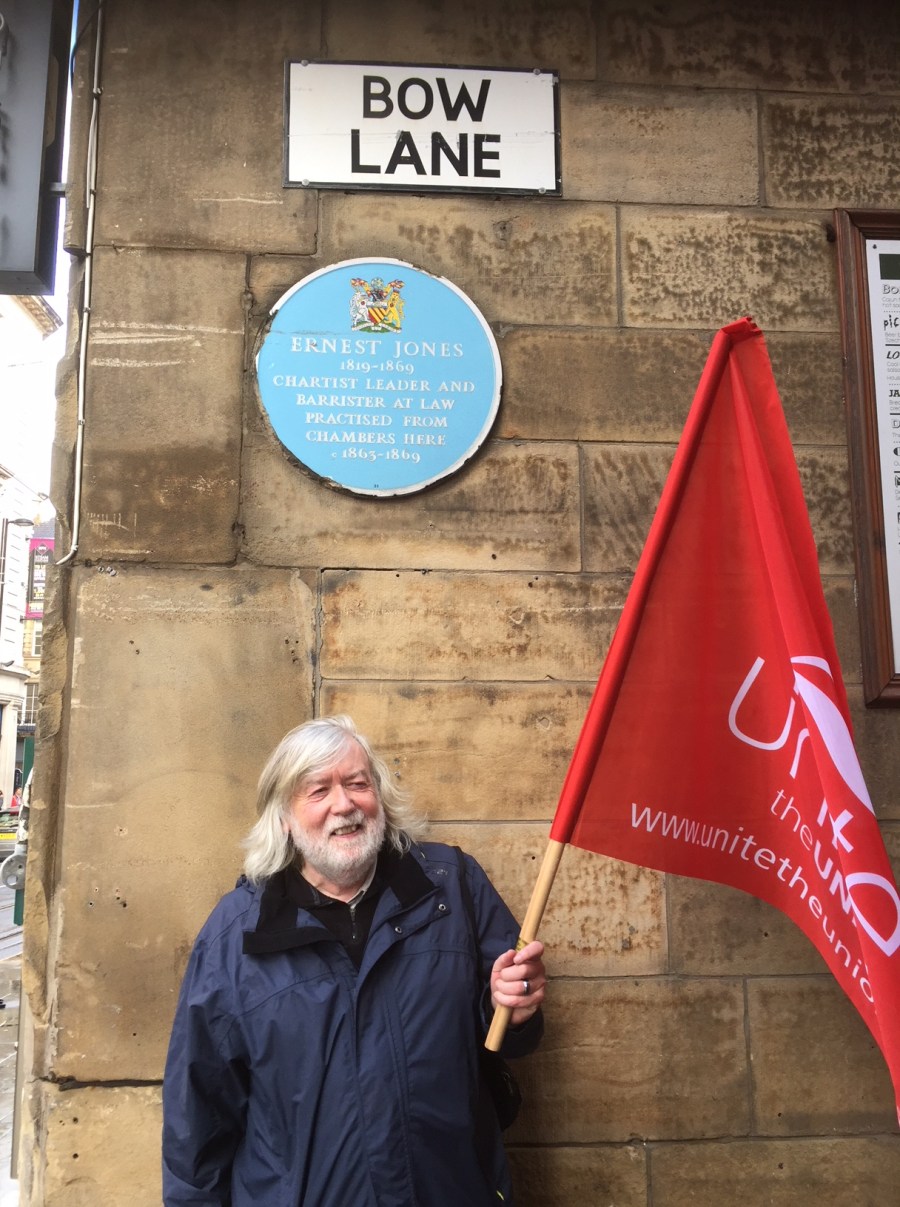
Ernest Jones (1819 – 1869) was honoured by Manchester City Council when they unveiled on 1 January 1983 a commemorative blue plaque at the site of his barristers chambers in the six years up till his death in Manchester. 

IMG_4647

German born Jones was of aristocratic background and was presented to Queen Victoria in 1841. He inherited his father’s property in 1844.

Despite a promising career as a Barrister, Jones soon after became a leader with the Chartist movement, (*) a working-class movement for political reform that existed between 1838 and 1848 and which took its name from the People’s  Charter of 1838.

Jones became a proponent of Physical Force and follower of Feargus O’Connor, who had threatened to use force if radical reform did not take place.

He urged people to constantly organise to obtain the Charter but Jones was arrested on 6 June 1848 after he predicted that the “green flag of Chartism will soon be flying over Downing Street.” He was convicted of sedition and sentenced to two years’ solitary confinement, with no writing materials.  Friends helped him to write his epic poem, the Revolt of Hindostan. 

On his release from prison, Jones issued periodicals such as The Labourer, the Northern Star and Notes to the People. He set up the People’s Paper in 1852 and until it closed in September 1858 he saw its function as maintaining an independent working class party. 

In 1860 Jones began working again as a barrister, concentrating on defending radicals, including Irish Fenians. At his funeral it was estimated that 100,000 people lined the streets of Manchester.

For more on Ernest Jones see:- 

https://www.wcml.org.uk/wcml/en/our-collections/activists/ernest-jones/

https://spartacus-educational.com/CHjones.htm

http://gerald-massey.org.uk/Jones/index.htm

* What was Chartism:- https://markwrite.co.uk/2018/06/15/chartist-sculpture-and-plaque-newport/

For reviews on books on Chartism see:- https://markwrite.co.uk/halifax-1842-a-year-of-crisis/

https://markwrite.co.uk/the-general-strike-of-1842/

IMG_4650


Spanish Civil War plaques

Remembering all those from Kirkcaldy who fought in Spain
Kirkcaldy

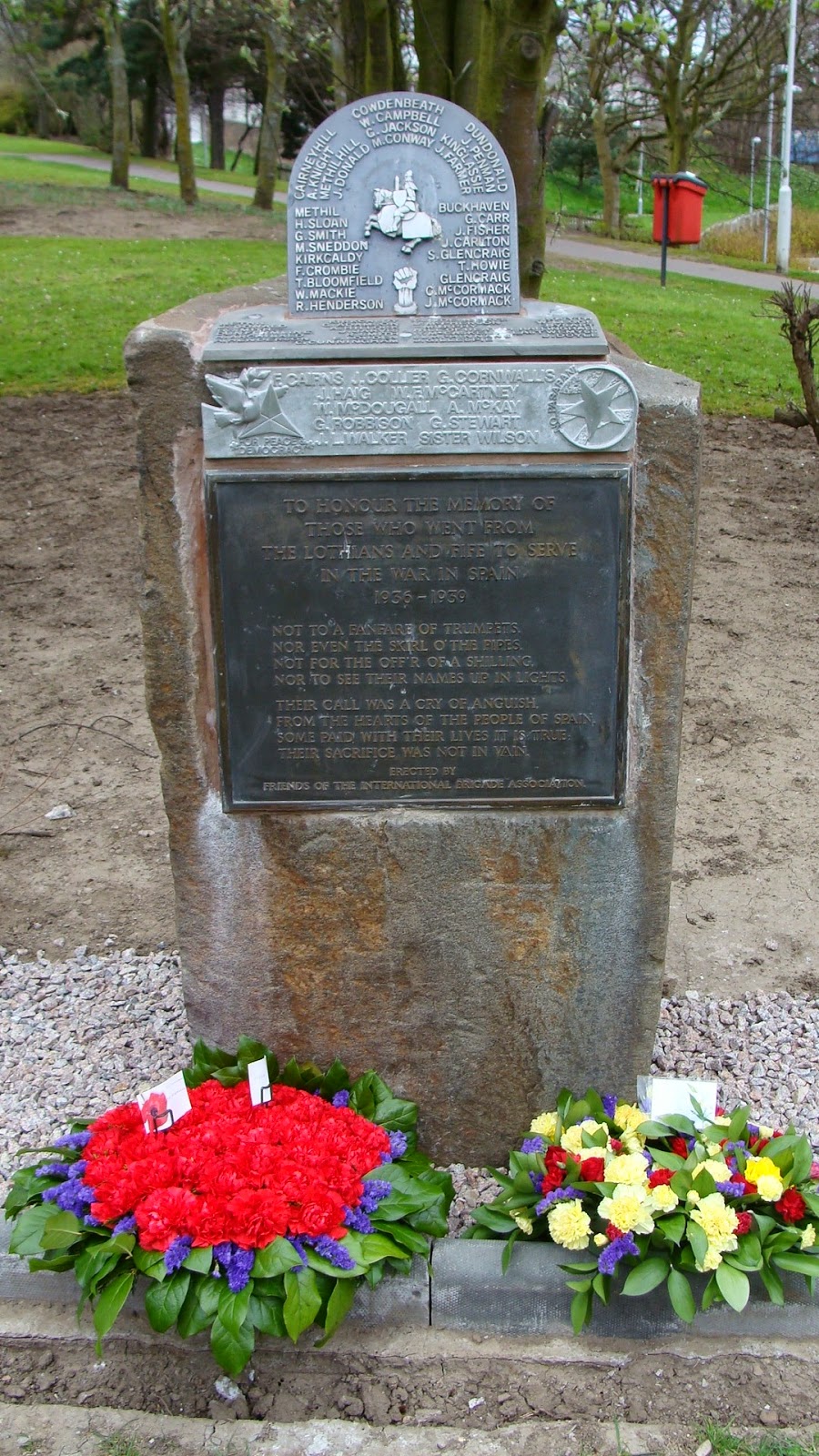
There is a plaque and a memorial on Forth Avenue, Kirkcaldy which commemorates local fighters in the Spanish Civil War. This was erected by Kirkcaldy District Council and Friends of the International Brigades, May 1980 and September 1986. It was rededicated 4 April 2009.

The inscription on the plaque reads, somewhat poetically, as follows:

“To honour the memory of those who went from The Lothians and Fife to serve in the war in Spain, 1936 – 1939.”

“Not to a fanfare of trumpets

Nor even the skirl o’ the pipes

Not for the off’r of a shilling

Nor to see their names up in lights

Their call was a cry of anguish

From the hearts of the people of Spain

Some paid with their lives it is true

Their sacrifice was not in vain”

(The International Brigade Association)

The names on the memorial are as follows:-

G Adamson, H Archibald, L Ballinghall, T Bloomfield, F Cairns, W Campbell, G Carr, J Collier, M Conway, G Cornwallis, F Crombie, C Cunningham, J Donald (Methihill), J Donald (Methil), J Farmer, J Fisher, J Gillespie, S Glencraig, J Haig,  R Henderon, A Henderson. A Hillock, T Howie, G Jackson, J Jarvis, A Knight, W Leggie, E Louden, W Mackie, W.F. McCartney, H McCaskill Hill, J McCormack, C McCormack, W McDougall, A McKay, J McPherson-Murray, J Penman, G Robbison, H Sloan, R Smith, G Smith, H Smith, M Sneddon, G Stewart, J.L. Walker, Sister Wilson.

Tommy Bloomfield’s Spanish Civil War recollections appear in VOICES from the Spanish Civil War book edited by Ian MacDougall.

Leicester 


leicsspvwar01

There is a memorial plaque in Peace Walk, Victoria Park, University Road, Leicester to Fred Sykes, Jack Watson and Roy Watts. All three Leicester volunteers were killed in the Spanish Civil War fighting for democracy and against the rise of fascism. The plaque was erected by Leicester Socialist Centre, 15 February 1993.

For more information on this go to:- http://www.leicestermercury.co.uk/Memorial-lives-lost-Spanish-Civil-War/story-19738907-detail/story.html

http://www.leicestermercury.co.uk/Leicester-volunteers-Spain-remembered/story-19863560-detail/story.html

Many thanks to Ross Galbraith for taking the photograph. In 1989, Ross and Gary Sherriff, both TGWU members, refused to work on a contract that their employer, Granby Plastics Limited, had accepted from South Africa. They were sacked for standing up to apartheid and for the next three years toured the UK and Ireland speaking about the need for workers to take direct action to disrupt British trade with South Africa.

Blantyre Memorial to Spanish Civil War martyrs 

Blantyre Memorial

A memorial to three local volunteers killed in the Spanish Civil War is located at Blantyre Miners’ Welfare Club. This was erected by East Kilbride and South Lanarkshire Trades Union Council on 24 October 2009.

Thomas Brannan, William Fox and Thomas Fleck were part of a larger group from Lanarkshire who joined the International Brigades to fight in support of the elected Spanish government against the military coup of General Franco, who enjoyed the military backing of German and Italian fascist leaders, Adolf Hitler and Benito Mussolini respectively.

The bronze sculpture was designed by Hamilton man Frank Casey who at the time of the unveiling said: “In these days of bogus celebrity there has never been a greater need to commemorate those true heroes who had the foresight to see that another world war was not inevitable and that the threat to civilisation known as fascism could be buried in Spain.

“They were neither dupes nor adventurers, but courageous men. Fleck in particular knew all about the horrors of modern mechanised warfare. Having won the Military Medal in France, he still felt it necessary to take up arms again in defence of the Spanish people.

“This work came about through the generous support of the local community and the South Lanarkshire Trades Council.”

John Londragon 

Aberdeen Trades Union Council offices are named after John Londragan and the premises at 22a Adelphi have a plaque which states: John Londragan House: Communist, International Brigadier and Life Long Trade Unionist, 1911-1993. The plaque was erected in 1993.

IMG00091-20140410-1104

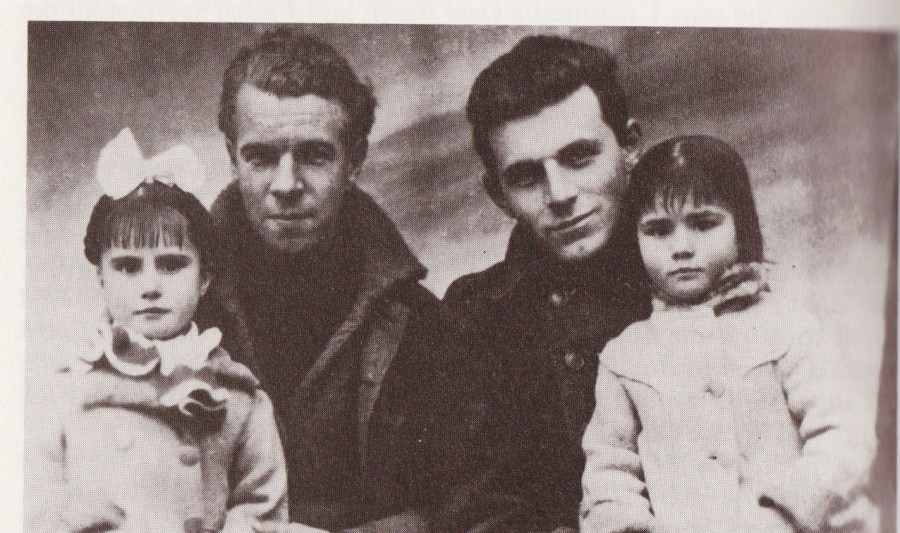
An article by John Landragan appears in the book Voices from the Spanish Civil War: personal recollections of Scottish Volunteers in Republican Spain 1936-39, edited by Ian MacDougall. The railway worker describes his motivation for risking his life: ‘Being a member of the Communist Party and being an anti-Fascist I though it was my duty to go and help the people in Spain.

‘And the fight, whether it be here in Aberdeen against the British Union of Fascists or against Hitler and Mussolini in Spain, was exactly the same to me, no difference at all.’

The Scotsman served in the Anti-Tank Unit of the XVth International Brigade at Jarama, which is south-east of Madrid, before being sent to Brunette, which is where he got wounded in the leg and arm. This finished his career on the military side but when he came out of hospital he was employed on the organisational side of the Brigade. Londragan later served – again in an Anti-Tank Unit – in the British Army during the Second World War.

Writing in 1986, the Aberdeen man wrote: ‘ Looking back, there isn’t a thing changed since 1936 as regards my views…..When I went to Spain I thought I was trying to halt Hitler and Mussolini and their exploitation of Europe……..so when we went to war in 1939 I did exactly the same job…… Both were anti-Fascist wars.’
londregan


Ralph Fox, Halifax 

Sam Wild, Manchester – International Brigade Commander


IMG_4684Sam Wild was born in Ardwick, Manchester, to an Irish immigrant family, in 1908. 
A blue plaque commemorating him is now mounted on the former family home on Birch Hall Lane, Rusholme, Manchester. 


IMG_4682

Here is a tribute to him by Gideon Long, his grandson. http://www.international-brigades.org.uk/content/my-granddad-and-spanish-civil-war

A news report on the plaque unveiling:- . 

https://www.manchestereveningnews.co.uk/news/local-news/a-band-of-brothers-that-fought-for-freedom-971115

Samuel Owen, Newtown and Manchester

Robert Owen

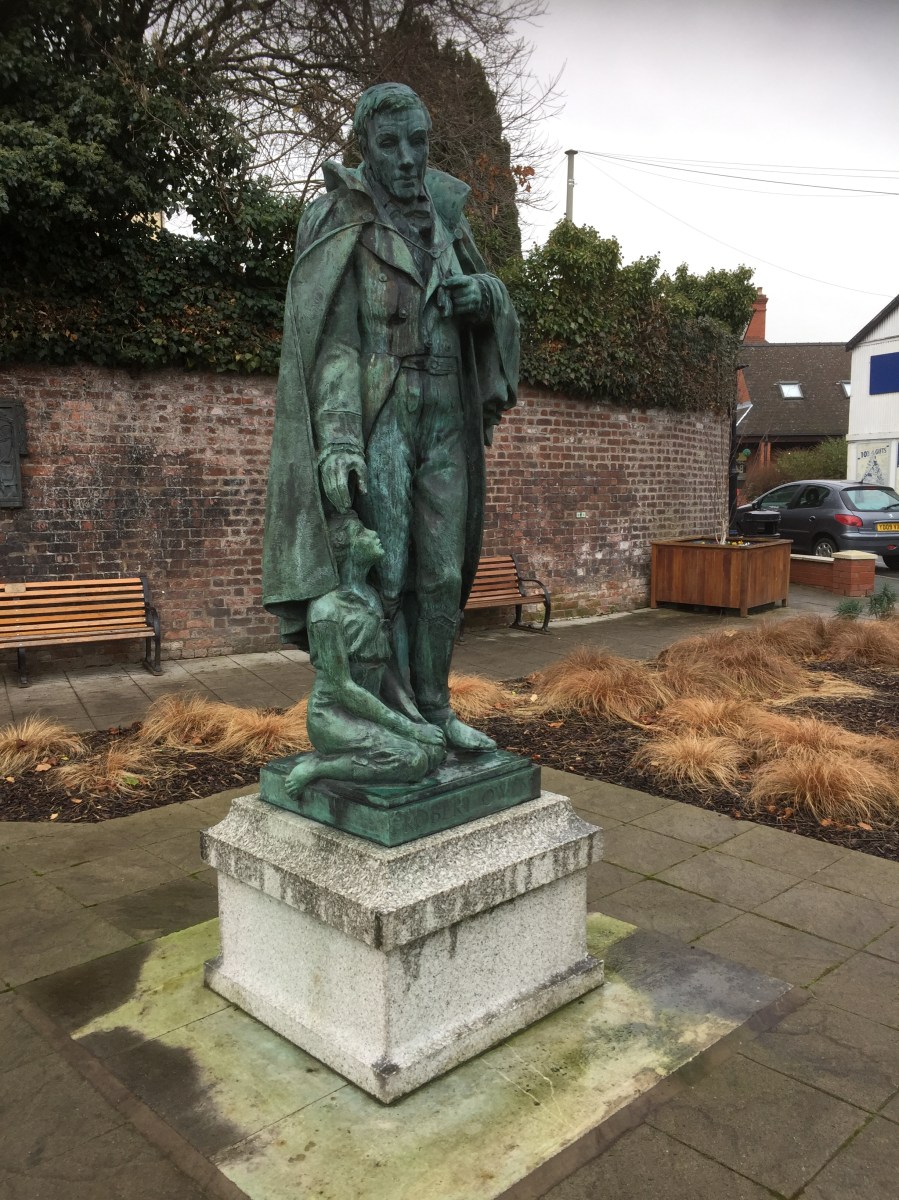
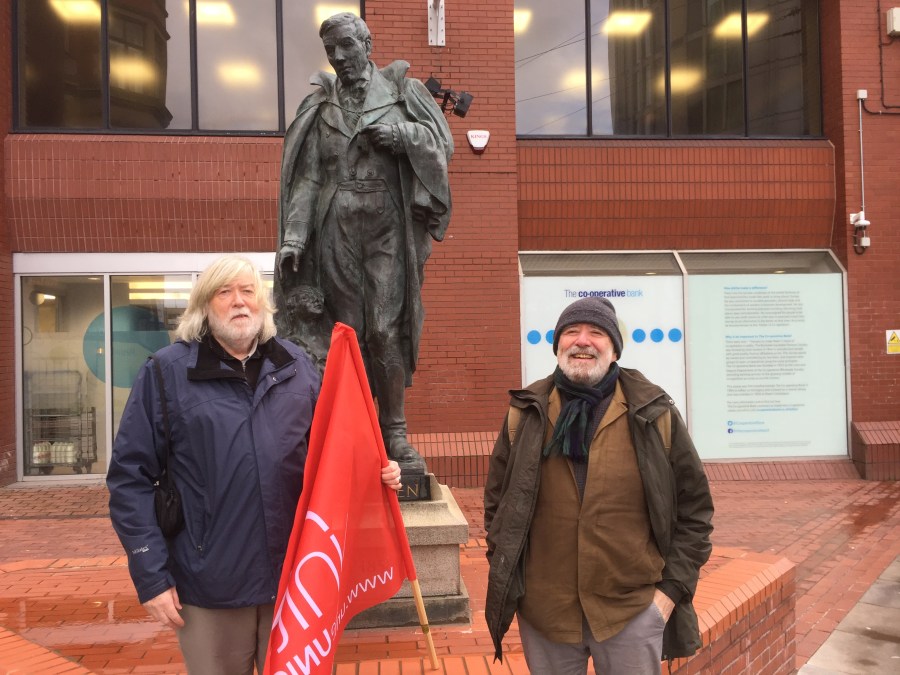
There are statues to Owen (1771-1858) in his hometown of Newtown, Powys and outside the Co-op Bank’s headquarters in Manchester, where there is also a plaque in his honour. Additionally, there is a monument to him that was unveiled in Kensal Green in 1879. Fifty years later a small museum dedicate to keeping his memory and his many ideas alive was opened in Newtown. Such an array of tributes shows the standing that Robert Owen, often described as the first socialist, has in the eyes of many people. 

IMG_4644
John Mooney and Tony Shaw outside the Co-op Headquarters in Manchester in front of the Robert Owen Statue 

Robert Owen (1771- 1858) was born and died in the small market town of Newton, Powys. At aged ten Owen moved to Stamford, Lincolnshire to become a draper’s apprentice before moving to Manchester, the heart of the industrial revolution. At 21 he was managing a large mill of 500 workers. The poverty and terrible working conditions, especially for very young children, he witnessed across the cotton trade caused Robert to consider developing radical alternatives to a capitalist system that failed most people. 

IMG_4427
Robert Owen statue in his hometown of Newtown 

Owen and his partners purchased New Lanark Mills and its workers’ village in 1799. New schools, including the first ever infants’ one, were built, adult evening classes introduced and a healthy environment was promoted by opening shops selling good affordable food. 

Owen wanted to demonstrate a way to end the degradation of the working class. But as he pushed for improvements by promoting a Factories Bill to raise the minimum employment age to ten, introduce half-time education up to the age of 12 and create a system of factory inspection, he was left frustrated when it was severely watered down by MPs, many of whom were owners of dark satanic mills themselves. 

In 1824, Owen sold some of his Scottish holdings. Seeking to expand his social experiments when he moved to New Harmony, Indiana. He returned to Britain in 1828 but his four sons and daughter remained there and subsequently played important political roles with congressman Robert Dale Owen openly calling on Abraham Lincoln to abolish slavery. 


IMG_4646
Robert Owen plaque in Central Manchester 

Owen sought to take his co-operative vision to a wider audience by publishing pamphlets, writing to newspapers and speaking publicly.  But he was also key to the development in 1834 of The Grand National Consolidated Trades Union. The famous print of the massive workers’ protest in London against the transportation of the Tolpuddle Martyrs shows him leading it on horseback. 

Owen died in 1858. By then the Rochdale Pioneers, inspired by his ideas, had opened the first successful co-op store. 

The Robert Owen Museum was opened in 1929. It stands just yards from his birthplace, helps explain the life of this remarkable man by skilfully combining many drawings, illustrations, photographs, books, a video, paintings, sculptures, everyday family objects and explanatory display boards. 

IMG_4426
Robert Owen Museum 

The Museum is free to visit and is an independent charity run entirely by volunteers, who should be congratulated for their efforts.  

“It is an old fashioned museum, which is part of its charm, acting as a memorial to the place where Owen was born and died. It gives a good overview to him and his ideas.” Volunteer Colin Laker, a retired history and politics teacher. 

The Museum is open 11am to 3pm, Monday to Friday. 

http://robert-owen-museum.org.uk

A HISTORY OF SHEFFIELD FOOTBALL 1857-1889

‘ONE OF THE GREAT FOOTBALL BOOKS’ 

Review of Martin Westby’s book A HISTORY OF SHEFFIELD FOOTBALL 1857-1889 by Mark Metcalf, co-author of FLYING OVER AN OLIVE GROVE. 

This is one of the best ever football books. Its author and publisher Martin Westby , who runs a British football magazines store called Soccerbilia, should be heartily congratulated for his considerable efforts and the accuracy he has achieved. 

Westby bases his investigations around Sheffield, where the first, Sheffield FC, and second, Hallam FC, clubs were formed and organised club football originated in the second half of the nineteenth century.  Between 1857 & 1889, 95 Sheffield clubs existed. 

Delving into the newspaper archives of the time, Westby meticulously analyses why, by whom — there’s some remarkable characters in the book — and with what purposes a series of long since departed clubs such as Attercliffe FC & Dronfield FC began.  

Such examinations of the clubs & their personnel are combined throughout with an explanation of how the rules of football were changed & developed. Some of these changes were covered in our Flying Over an Olive Grove book on Fred Spiksley & the approval that we received from readers clearly indicated that football fans are hungry for such detailed analysis on changes to the laws of the game. Westby’s work is thus to be welcomed.

What will prove especially interesting for football fans is the author’s attempt, essential to his desire to create a chronological history of football clubs, to compose a set of rules that can be applied right across all clubs, past and ongoing, in order to try and ensure the claimed foundation dates can be measured against each other. 

So, for example, with the rules evolving between 1857 until 1871 – when the Rugby Football Union was formed, thus creating a clear distinction between Football and Rugby – then a club that began by playing Rugby before turning to Association Football is included and its foundation date is when the club was originally formed. This will please followers of Bradford teams. 

If a club claims an earlier date than any of the evidence assembled suggests then it must appear in the press of the time to confirm that earlier existence. As is now accepted as fact, Stoke did not exist before 1868 and were not formed in 1863 as it currently states on the Stoke City badge and website. 

Westby dates the formation of WBA as 1874 and not 1878 and he shows how Reverend Tiverton Preddy, the man credited with setting up Barnsley, did not actually get involved with the Tykes until the Easter of 1888 and not in September 1887 when the South Yorkshire club were formed. 

This is a great football book and well worth buying at £15.95.  Purchase it at www.EnglandsOldestFootballClubs.com

Further information: 07979 794391 martin@EnglandsOldestFootballClubs.com

@martinwestby