Ebenezer Elliott, Rotherham

Ebenezer Elliott: The poet of the poor 

Plaque that commemorates birthplace of Ebenezer Elliott in Rotherham

Ebenezer Elliott liked to call himself “the poet of the poor” and was publicly known as “the Corn Law rhymer” for his leading role in the fight to repeal the Corn Laws (1815-1848/9) that by restricting imported grain raised food prices and boosted the profits of the landowners. In turn this also restricted the growth of other economic sectors including manufacturing. When the Corn Laws were repealed during the first years of the Irish famine it was viewed as a decisive shift towards free trade in Britain. 

Elliott was born at the New Foundry, Masborough, Rotherham on 17 March 1781. He contracted smallpox at an early age and this left his health permanently affected. Hating school he spent much of his time exploring the countryside around Rotherham. He began studying botany and reading extensively on his own. He wrote his first poem at aged 17. 

The woman he married, Frances Gartside, was wealthy and Elliott invested her fortune in his father’s share of an iron foundry only to lose everything. In 1816 he was declared bankrupt. Over the following three years he was impoverished and desperate and this sorry state of affairs appears to have made Elliott identify with the poor from then till the end of his life on 1 December 1849. 

In 1819, Elliott obtained funds from his wife’s sister and with which he began business as an iron dealer. He became a successful iron merchant and steel manufacturer. He became strident in demanding improved conditions for the manufacturer and the worker. 

He called for the end of the Corn Laws, was active in the Sheffield Political Union and he chaired the Sheffield meeting when the Chartist 6 points – see http://www.unitetheunion.org/growing-our-union/education/rebelroad/murals/

to extend universal suffrage were placed before local people. The poet later withdrew from the Chartist movement when some in it began to advocate violence, 

After publishing a single poem The Ranter in 1830, Elliott published in 1831 the Corn Law Rhymes, which contrasted the dreadful conditions of working people compared to the gentry. He proceeded to write a considerable number of poems along similar lines. His poems were later published in Europe and in the USA. One of his final poems was The People’s Anthem and this was later retitled Save the People and was included as a musical score in the 1971 rock musical Godspell. 

When Ebenezer Elliott died he was buried in All Saints Church, Darfield, where the churchyard also contains a monument to the 1857 Lundhill explosion that killed 189 men and boys. 

In 1854 a monument, which is not believed to be a great likeness of him, was erected and now stands in Weston Park, Sheffield. 

The Harvest sculpture by Martin Heron

Elliott’s birthplace of Rotherham was slower to honour him. In 2009 artwork by Martin Heron was erected at Rhymer’s Roundabout. It is titled ‘Harvest’ and depicts ears of corn as an illusion to the Corn Law Rhymes. The same year saw Wetherspoons open a new pub in Rotherham that is called The Corn Law Rhymer. 

In 2013 a blue plaque commemorating the poet was unveiled at the town’s medical centre, which rests on the site of the iron foundry where he was born. 

Many thanks to Gerard Dempsey for his work on this article. Gerard is the former Unite Father-of-the-Chapel at Polestar in Sheffield and a member of the GPMU & IT sector of the union.

Gerard Dempsey at the grave of Ebenezer Elliott
Gerard Dempsey at the grave of Ebenezer Elliott 

Robert Tressell, Pembroke Place, Liverpool

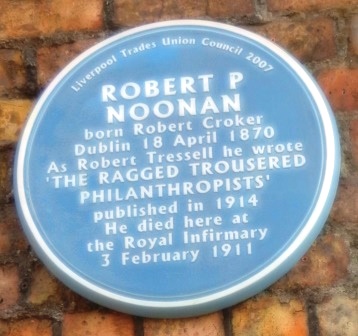
Robert Tressell plaque11-23021

Robert Noonan, formerly Croker, and better known by his pseudonym Robert Tressell (1870-1911) is commemorated with a plaque in Pembroke Place, Liverpool.

Tressell is best known for his great novel on the building trade, The Ragged Trousered Philanthropists, published posthumously in 1914, the full version not appearing until 1954. Tressell was taken ill en route to Canada and after spending time in the Liverpool Workhouse he died in February 1911 in the Royal Infirmary Hospital. He was subsequently buried in a pauper’s grave in Walton Park Cemetery.

Women’s suffrage, Ramsbottom

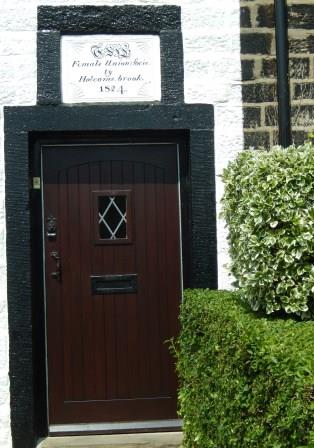
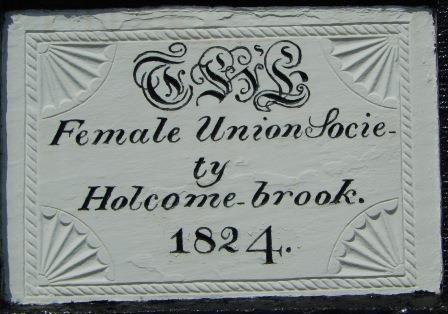
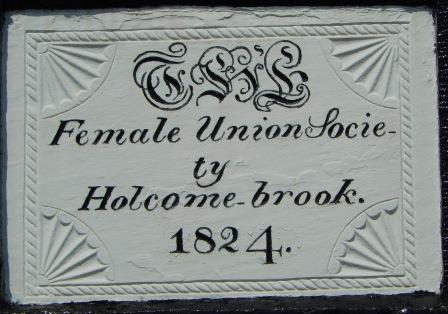
Female Union Society plaque in Ramsbottom11-18041

In the second decade of the nineteenth century, a lack of suffrage (more than half of all MPs were elected by just 154 votes) and the poor economic conditions that followed the end of the Napoleonic Wars in 1815 combined to create a mass movement that demanded reform of parliamentary representation.

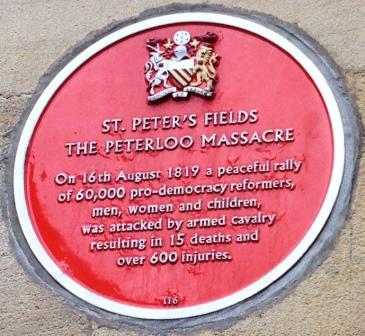
On 16 August 1819 at St Peter’s Field, Manchester a cavalry charge resulted in the deaths of 15 demonstrators from amongst a crowd estimated at between sixty and eighty thousand. The massacre was to become known as Peterloo, an ironic reference to the Battle of Waterloo four years earlier.

Amongst the crowd were many women. Nevertheless, radical policy at this period was generally to press for universal male suffrage. Some female campaigners were not content and organised Female Union Societies to demand a vote for all, male and female. Many societies were established in the North-West of England industrialised cotton towns, including at Holcombe Brook, Ramsbottom, just north of Bury.

An inscribed stone at a cottage in Holcombe Brook is the only surviving evidence of this particular women’s organisation.

Female Union Society plaque11-18042


Newry Dock Strike 1907

Newry plaque11-23372


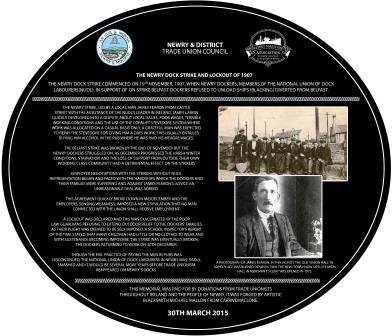
A bespoke memorial plaque in honour of the Newry Dock Strike and lockout of 1907 and the man who led it, James Fearon, was unveiled by Newry and District Trade Union Council and the Newry Maritime Association on 30 March 2015.  

Written information about the strike on the plaque, which is located on Merchants Quay, is accompanied by a photograph of Fearon and Newry dockers as well as a starving family and bread and roses on the plinth. 

The strike started on 19 November 1907 when Newry dockers, who were members of the National Union of Dock Labourers (NUDL), one of Unite’s predecessor unions, supported striking Belfast dockers by refusing to unload ships diverted from Belfast. Newry dockers had become organised after James Fearon had accompanied James Larkin when he returned from Britain in 1905. 

Despite hostility from local and regional employers, politicians, the church and press the strikers showed great resolve as they pressed to improve wages and working conditions. Poverty ultimately brought down the strike on 30 December when those who returned to work had to agree not to belong to the NUDL, whilst those who remained members were victimised and unable to find em-ployment and feed their families. 

Fearon was later forced to enter the local workhouse and in 1912 he left to move to Scotland where he continued to play a part in the trade union movement up until his death in 1924. A short book on Fearon’s life was published in 2000: The Third James(*), James Fearon, 1874-1924, An unsung hero of our struggle. This was written by Bill McCamley. Rebel Road is hoping to make this available in due course.

C Patton also wrote his dissertation, titled, The Newry Dock Strike 1907, and, again, Rebel Road hopes to make this freely available in due course. 

Many thanks for the information that appears here to Ronan Turley, a Unite rep in Warrenpoint and who is a delegate from his branch to Newry Trades Union Council. “I was really pleased when it proved possible to get the plaque designed and unveiled. It should encourage people to find out more about this important labour movement event,” said Ronan. 


*    This is a reference to James Connolly and James Larkin.

Joseph Burgess


Joseph Burgess blue plaque11-23497

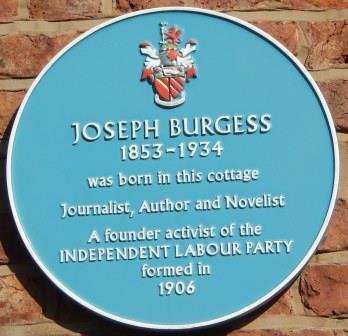
A blue plaque at the birthplace of journalist and Labour politician Joseph Burgess was unveiled at 64a, Old Road, Failsworth in October 2007. Failsworth Historical Society had campaigned for the erection of the plaque with Kevin McPhillips dissertation key to the resurrection of interest in Burgess’s life and work.

Burgess, a Christian Socialist, spent his life, talents and energy in the cause of the working class. He was just six when he began work in a card-cutting room and worked as a cotton operative until he was 28 when he began work as a correspondent for a local newspaper.

His talents as a journalist could have earned him an easier life but he refused to compromise to satisfy the major print employers. Burgess established and worked for a number of socialist papers including the Yorkshire Factory Times and Bradford Pioneer.

Burgess was active in the creation of the Independent Labour Party (ILP), a socialist party established in Bradford in 1893 and which was affiliated to the Labour Party from 1906 to 1932. Burgess was unsuccessful on a number of occasions when he stood as an ILP Parliamentary candidate but he was elected as a member of Glasgow City Council and served between 1902 and 1905.

Burgess married three times, had six children and died January 1934.

Many thanks to Alan Bedford, a Unite safety rep from Oldham, for ensuring Joseph Burgess is on Rebel Road.

“I want to help ensure that the labour movement heroes of the past are not forgotten as hopefully they can act as an encouragement to activists today.” said Alan.
.

Joseph Burgess


Joseph Burgess blue plaque11-23497A blue plaque at the birthplace of journalist and Labour politician Joseph Burgess was unveiled at 64a, Old Road, Failsworth in October 2007. Failsworth Historical Society had campaigned for the erection of the plaque with Kevin McPhillips dissertation key to the resurrection of interest in Burgess’s life and work.

Burgess, a Christian Socialist, spent his life, talents and energy in the cause of the working class. He was just six when he began work in a card-cutting room and worked as a cotton operative until he was 28 when he began work as a correspondent for a local newspaper.

His talents as a journalist could have earned him an easier life but he refused to compromise to satisfy the major print employers. Burgess established and worked for a number of socialist papers including the Yorkshire Factory Times and Bradford Pioneer.

Burgess was active in the creation of the Independent Labour Party (ILP), a socialist party established in Bradford in 1893 and which was affiliated to the Labour Party from 1906 to 1932. Burgess was unsuccessful on a number of occasions when he stood as an ILP Parliamentary candidate but he was elected as a member of Glasgow City Council and served between 1902 and 1905.

Burgess married three times, had six children and died January 1934.

Many thanks to Alan Bedford, a Unite safety rep from Oldham, for ensuring Joseph Burgess is on Rebel Road.

“I want to help ensure that the labour movement heroes of the past are not forgotten as hopefully they can act as an encouragement to activists today.” said Alan.
.

Peterloo, Manchester 1819

Peterloo, Manchester 

Manchester’s Tiananmen Square 

Peterloo Massacre plaque11-23502

There is a small red plaque to the 1819 Peterloo massacre on the wall (it’s on the corner of Peter Street and Southmill Street) of the Radisson Hotel (the Free Trade Hall as was), Manchester. 

In 1819 only 2% of people could vote and there was widespread poverty, due mainly to the corns laws that artificially inflated bread prices. On 16 August 1819, contingents from across the Manchester region marched in disciplined fashion to St Peter’s Field to support parliamentary reform by listening to radical speaker Henry Hunt. The crowd was at least 60,000, half the population of the immediate Manchester area. 

Banners demanded REFORM, UNIVERSAL SUFFRAGE AND EQUAL REPRESENTATION. Those in a government representing their own needs wanted no such things and sought to arrest Hunt and disperse the crowd. 

Wielding sabres, Manchester and Salford Yeomanry galloped into the unarmed, peaceful masses. Two-year-old William Fildes was the first casualty when a late arriving trooper knocked him from his mother’s arms. Fifteen people, at least, were killed and 600 to 800 injured.  

Amongst the dead was ex-soldier John Lees, who fought at the Battle of Waterloo. Peterloo became a mocking reference to Waterloo at which soldiers were viewed as genuine heroes. In recent times Peterloo has become compared with the slaughter of pro-democracy demonstrators in Tiananmen Square in 1989. 

Not content with their killings the authorities in 1819 cracked down on reform. However, liberty could not be suppressed and demands for economic and political justice multiplied. The great Reform Act of 1832 meant Manchester, previously unrepresented in Parliament, elected two MPs. Sweeping democratic changes followed later. 

Annual commemoration 


There is an annual commemoration of the Peterloo Massacre on the 3rd Sunday in August. This is organised by the Peterloo Massacre Memorial Campaign, which is seeking by 2019, the bicentennial anniversary of Peterloo, ’A fitting memorial to the martyrs of democracy.’ 

Manchester City Council is committed to a new memorial, which will be part of the redevelopments of the St Peter’s Square area. Turner prize winner Jeremy Deller has been commissioned to design the memorial. 

For more information on Peterloo, including details of the annual commemoration events, go to:- http://www.peterloomassacre.org/index.html 

Chartist Sculpture and plaque, Newport

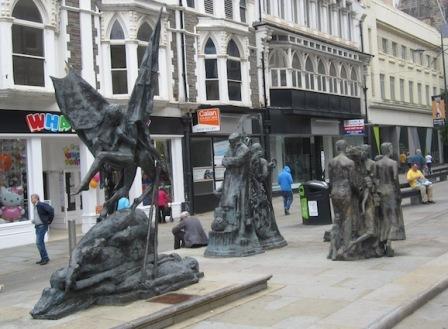
Chartist sculpture11-14160

The Chartist sculpture is positioned in Westgate Square in Newport. This was where John Frost led more than 3,000 people on 4 November 1839 to demand the release of several Chartists being held in the Westgate Hotel. This was the last armed rebellion in Britain and it was ruthlessly suppressed when 28 soldiers inside the hotel were ordered to open fire on the crowd. At least twenty people were killed and fifty wounded. Frost and other leaders of the march were subsequently found guilty of high treason and transported for life. 

Chartism was a working-class movement for political reform that existed between 1838 and 1848 and which took its name from the People’s  Charter of 1838. This had six basic reforms in order to make the political system more democratic: 

1) A vote for every man over the age of 21 

2) A secret ballot for elections 

3) No property qualification for members of Parliament 

4) Payment for MPs (so poor men could become one) 

5) Constituencies of equal size 

6) Annual elections for Parliament 

Plaque to the dead 

Some of the Chartist dead were buried in the Cathedral Church of St Woolos (pictured above),  which dates back to Anglo-Saxon times, in Newport where there is still a plaque to their memory. 

International Workers Memorial, Bathgate, West Lothian

International Workers Day Memorial - Bathgate11-17676

This is located in Bathgate Sports Park, below which lies the remains of Balbardie Colliery, where on Tuesday 19 February 1895 a boiler explosion killed Richard Biswick, a fireman employed by the owners (Henry Walker and Cameron) and Robert Strickland, a tramp who happened to be in one of the fire holes when the boiler exploded.

In 1992 an International Workers Day Memorial was commissioned by the Lothian Federation of Trades Councils. Since when every April 28th a special ceremony is held to Remember the Dead and Fight for the Living.

For more details on the explosion see http://scottishmining.co.uk/indexes/1895deaths.html

There is book which gives greater details about the explosion: Historic Steam Boiler Explosions is by Alan McEwen and available at www.sledgehammerengineeringpress.co.uk

Many thanks to Jim Swan, West Lothian TUC secretary and Unite member, for the photograph and information on this important memorial.